

/
-
Prosperity and Innovation—
Songshan-Xinyi-Nangang LineSongshan and Xinyi districts are vibrant and modern, while Nangang serves as Taipei’s eastern gateway. These areas are thriving with business, finance, trade, and technology, showcasing the city's future development potential.
-
Prosperity and Innovation—
Songshan-Xinyi-Nangang LineSongshan and Xinyi districts are vibrant and modern, while Nangang serves as Taipei’s eastern gateway. These areas are thriving with business, finance, trade, and technology, showcasing the city's future development potential.
-
Prosperity and Innovation—
Songshan-Xinyi-Nangang LineSongshan and Xinyi districts are vibrant and modern, while Nangang serves as Taipei’s eastern gateway. These areas are thriving with business, finance, trade, and technology, showcasing the city's future development potential.
-
Prosperity and Innovation—
Songshan-Xinyi-Nangang LineSongshan and Xinyi districts are vibrant and modern, while Nangang serves as Taipei’s eastern gateway. These areas are thriving with business, finance, trade, and technology, showcasing the city's future development potential.
-
Prosperity and Innovation—
Songshan-Xinyi-Nangang LineSongshan and Xinyi districts are vibrant and modern, while Nangang serves as Taipei’s eastern gateway. These areas are thriving with business, finance, trade, and technology, showcasing the city's future development potential.
-
Prosperity and Innovation—
Songshan-Xinyi-Nangang LineSongshan and Xinyi districts are vibrant and modern, while Nangang serves as Taipei’s eastern gateway. These areas are thriving with business, finance, trade, and technology, showcasing the city's future development potential.
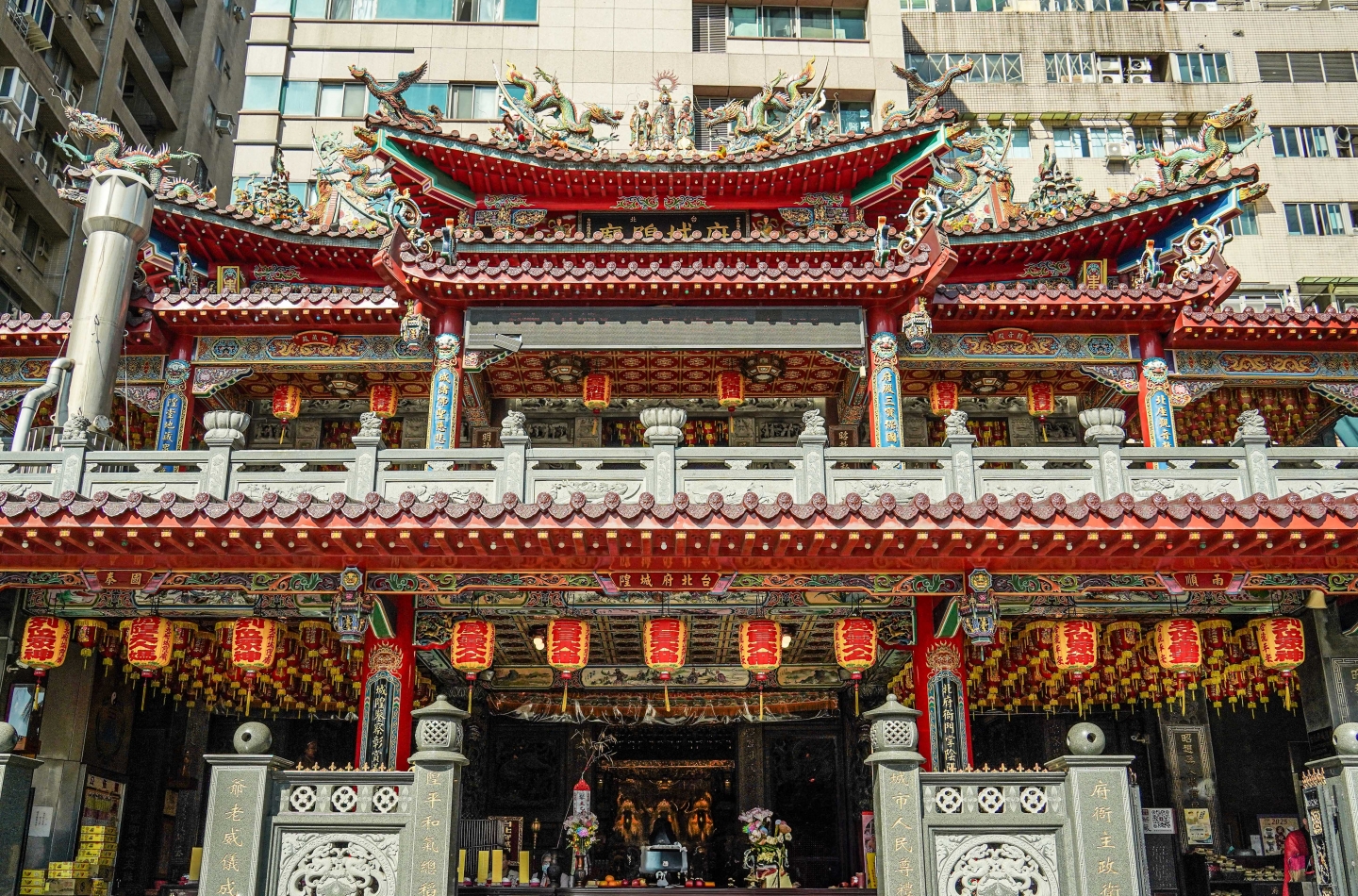
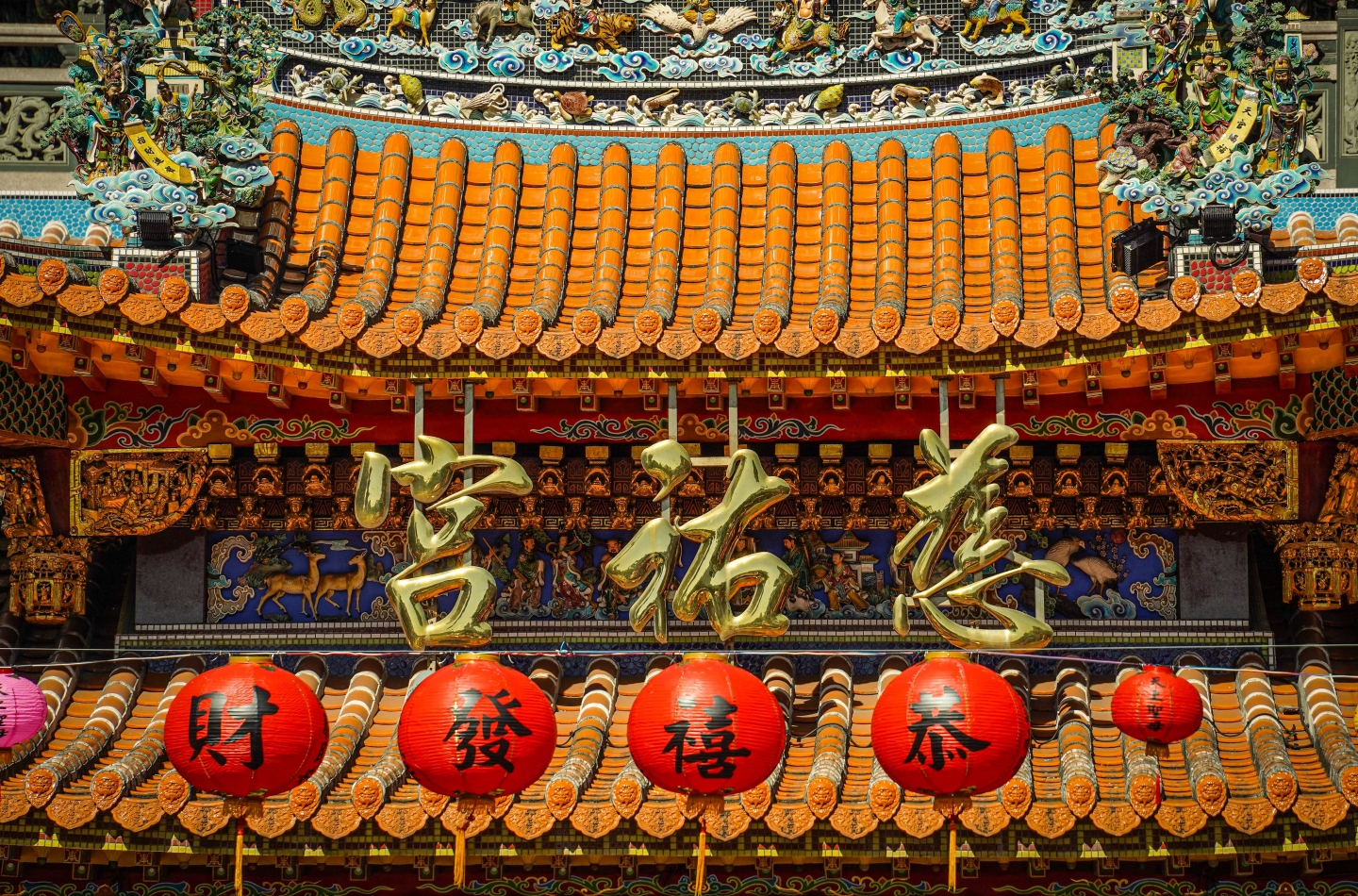
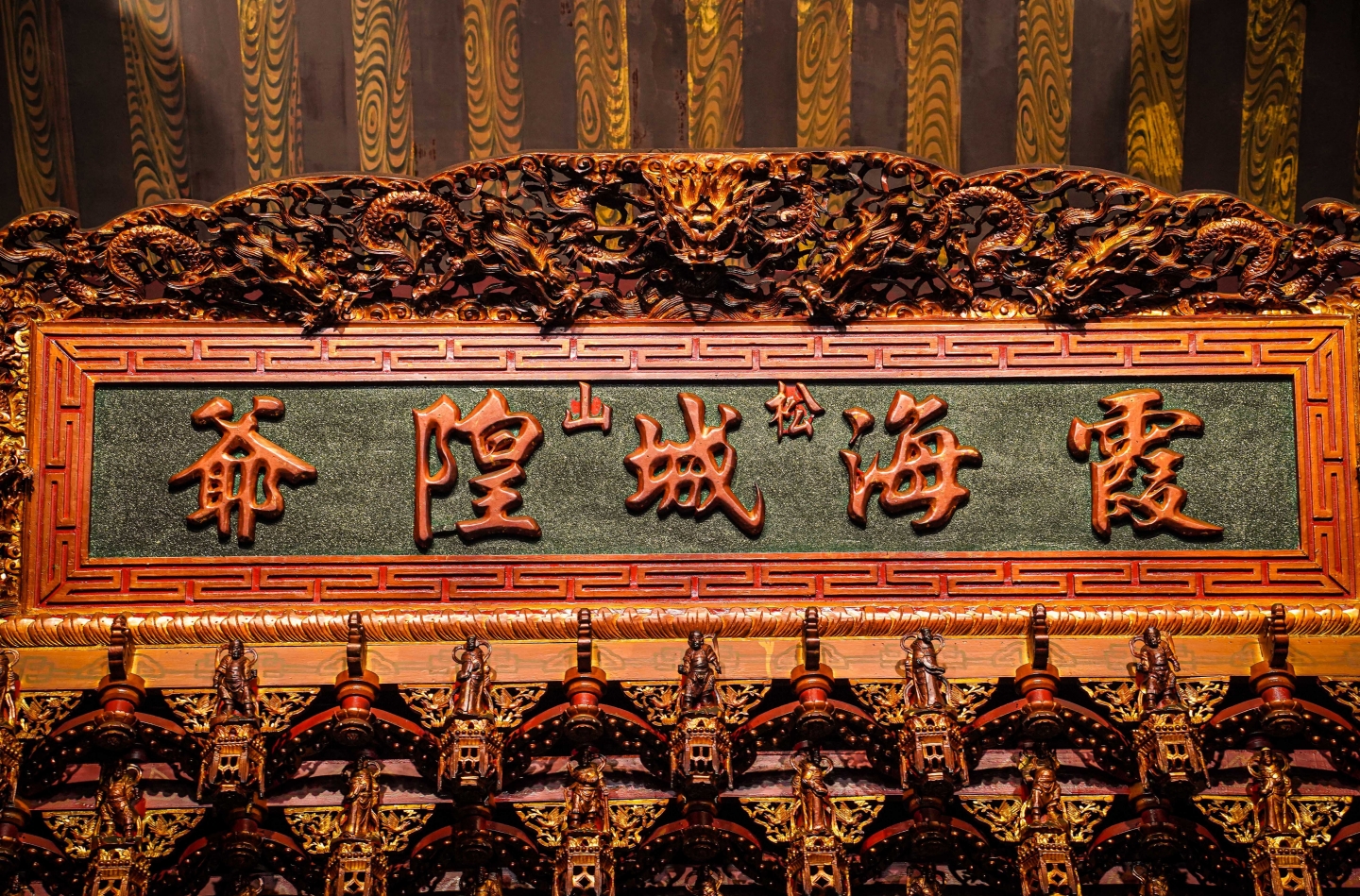
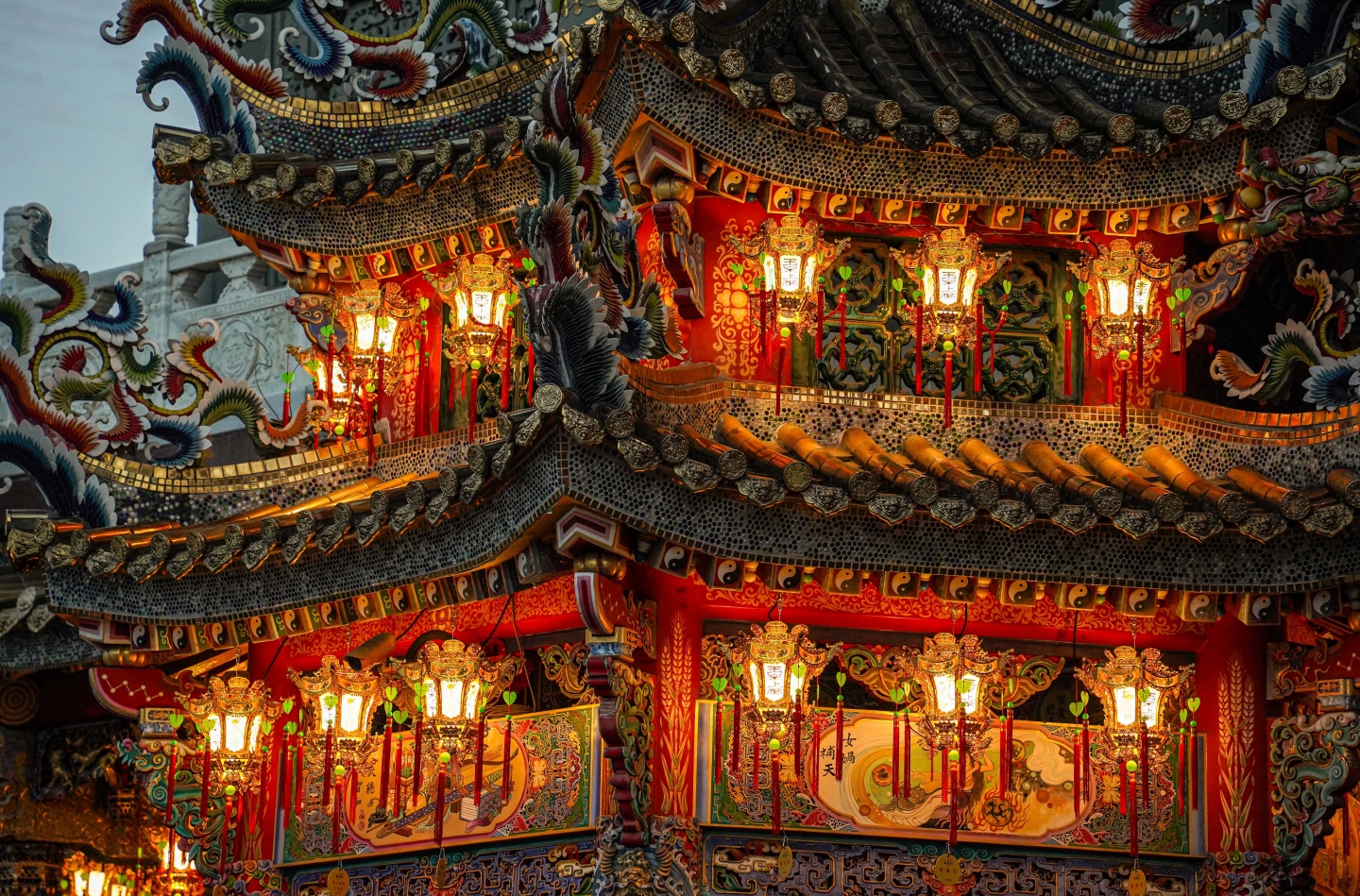
TaipeiFu Chenghuang Temple
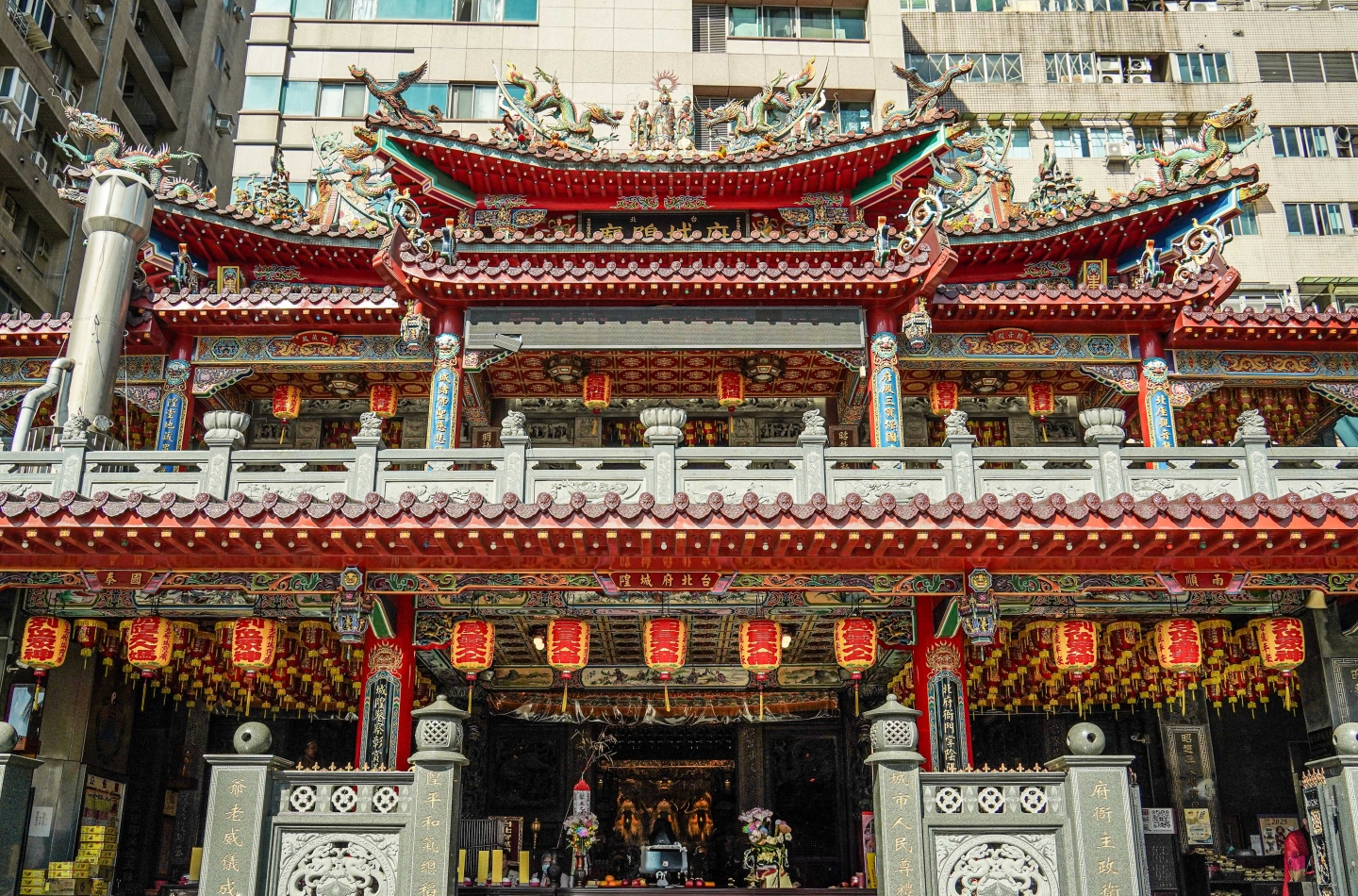
TaipeiFu Chenghuang Temple was formerly known as Zhaoming Temple.
TaipeiFu Chenghuang Temple was originally built during the Guangxu era of the Qing Dynasty. It was once the Taipei Prefecture City God Temple. After being dismantled due to urban redevelopment, it was rebuilt behind Songshan Station and renamed “Zhaoming Temple,” reflecting the meanings of the temple plaques: “Justice Manifested” and “Clear Distinction Between Good and Evil.” Originally located in the heart of the old Taipei prefectural city, the temple was later relocated to its current site in Xikou and now enshrines Wei Ling Gong, the City God of Taipei Prefecture. As a symbol of justice and protection for the community, the temple bears witness to Taipei’s urban transformation. It tightly links ancient faith with modern life, serving as a spiritual stronghold for residents and a cultural thread weaving together Taipei’s past and present.
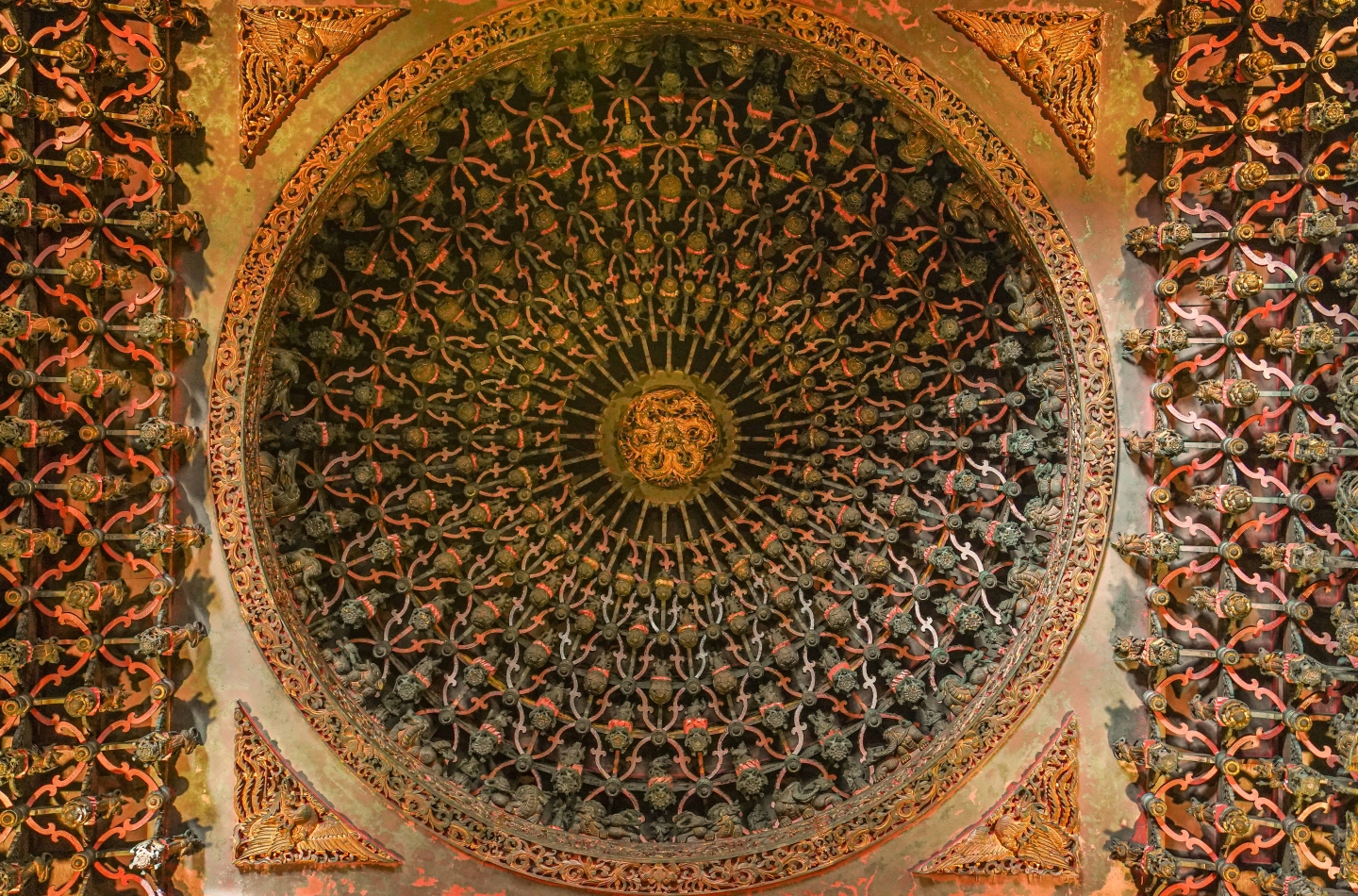
The layered dougong brackets of the coffered ceiling showcase the masterful craftsmanship of the artisans.
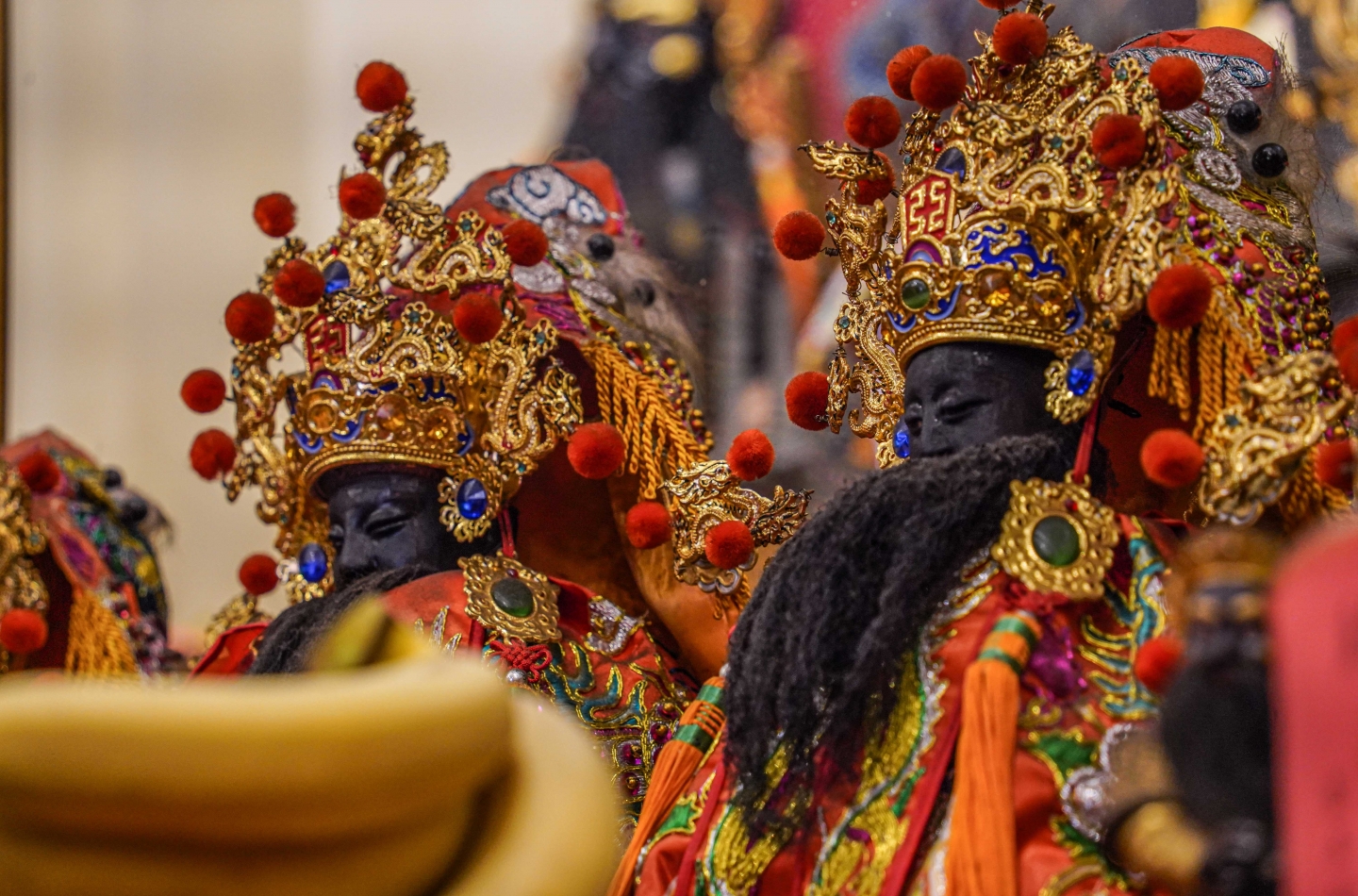
The enshrined City God originates from the Qing-era TaipeiFu Chenghuang Temple.
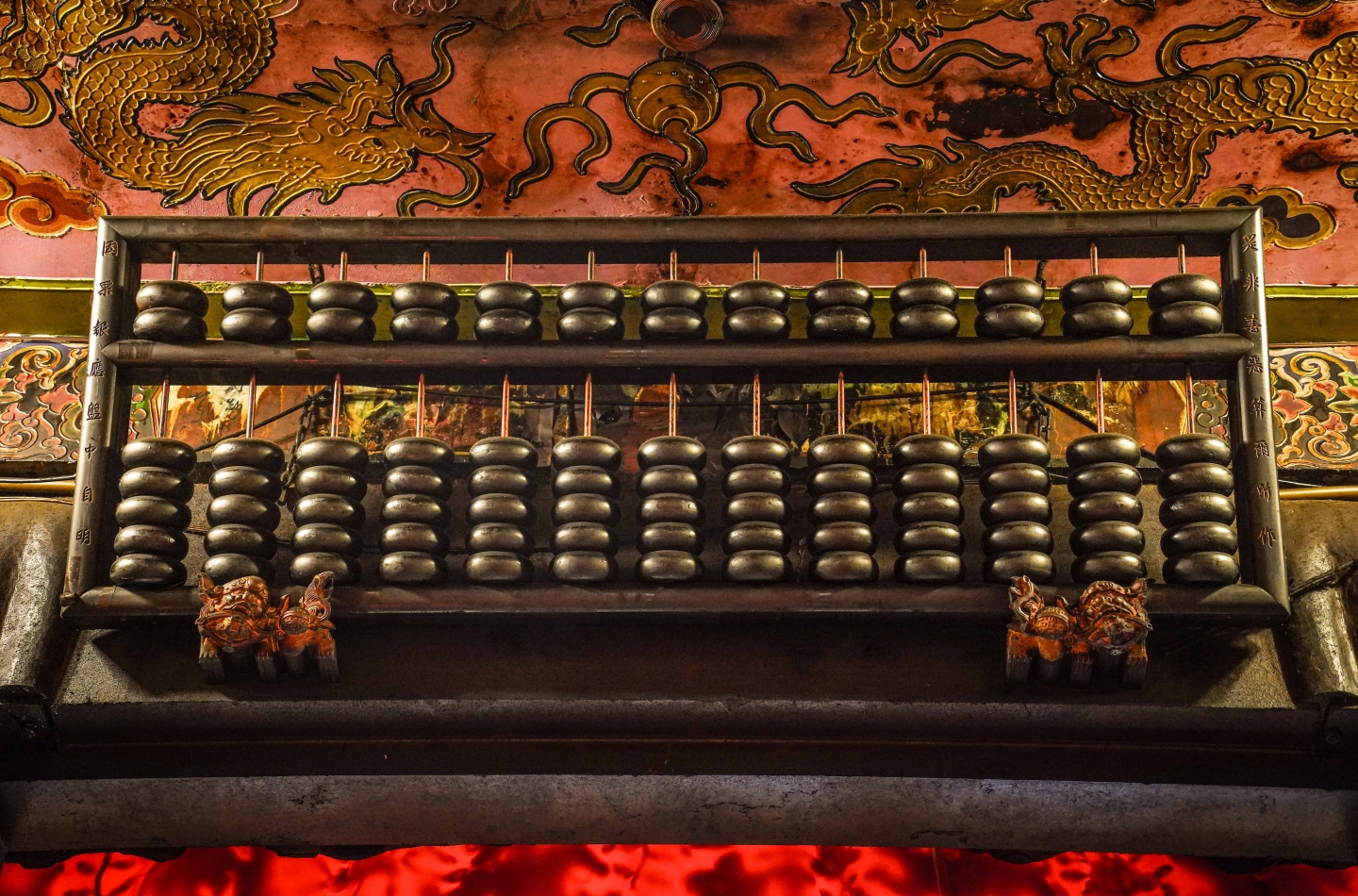
An abacus hangs above the main hall entrance, symbolizing fair judgment of human virtue and vice.
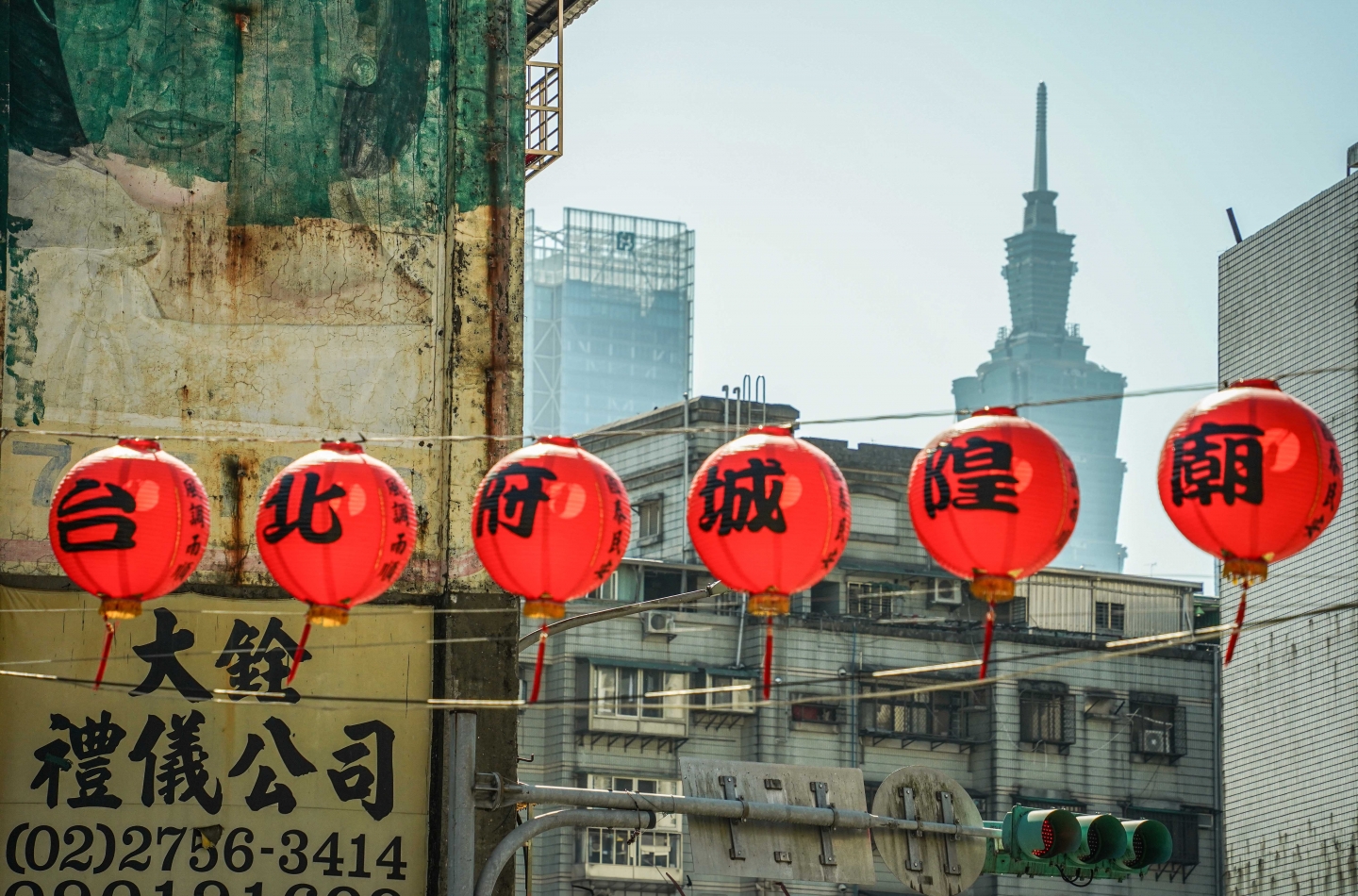
Taipei 101 stands in view, glowing beside the Chenghuang Temple lanterns.
Songshan Ciyou Temple
 Songshan Ciyou Temple, formerly known as Xikou Mazu Temple, was jointly established by residents of thirteen neighboring villages.
Built in 1753, Songshan Ciyou Temple is dedicated to Mazu and has over 200 years of history. It originally served the residents of Xikou Street and thirteen surrounding villages, earning Mazu the local title “Xikou Mazu.” A rare architectural feature within the temple is the pair of stone lions at the entrance: the male lion has an open mouth, while the female lion's mouth is closed—an uncommon design in Taiwan.
At night, the temple glows in harmony with the vibrant lights of the nearby Raohe Street Night Market. The mingling scent of incense and street food creates a unique sensory experience, allowing visitors to enjoy local delicacies while feeling the gentle protection of Mazu. Amid the fast-paced city life, Songshan Ciyou Temple remains a spiritual anchor for believers and locals alike. Beyond providing spiritual comfort, the temple actively supports the underprivileged and engages in charitable acts, embodying Mazu’s spirit of compassion and protection for the world.
At night, the temple glows in harmony with the vibrant lights of the nearby Raohe Street Night Market. The mingling scent of incense and street food creates a unique sensory experience, allowing visitors to enjoy local delicacies while feeling the gentle protection of Mazu. Amid the fast-paced city life, Songshan Ciyou Temple remains a spiritual anchor for believers and locals alike. Beyond providing spiritual comfort, the temple actively supports the underprivileged and engages in charitable acts, embodying Mazu’s spirit of compassion and protection for the world.
Surrounding attractions Events Official website
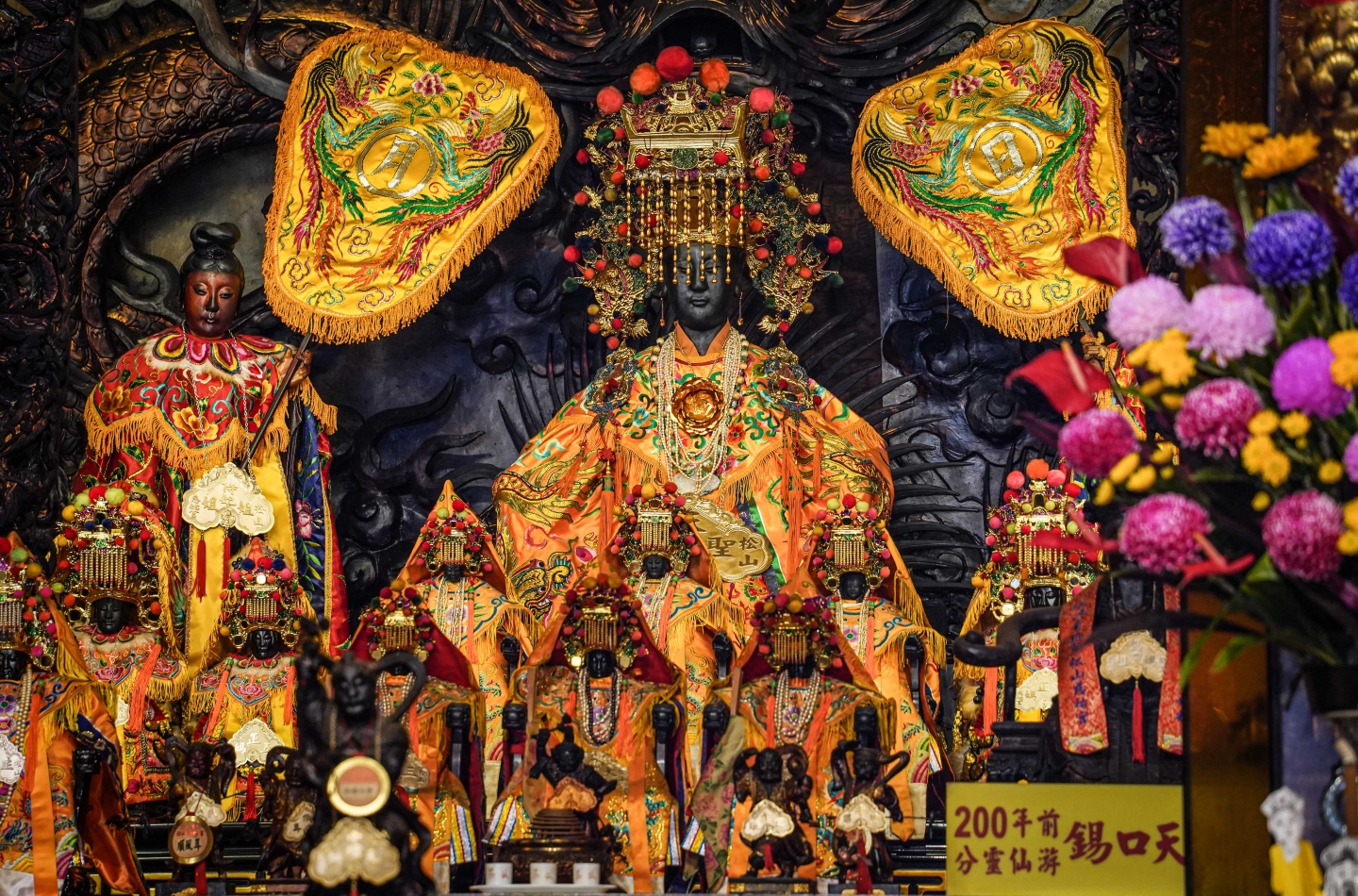
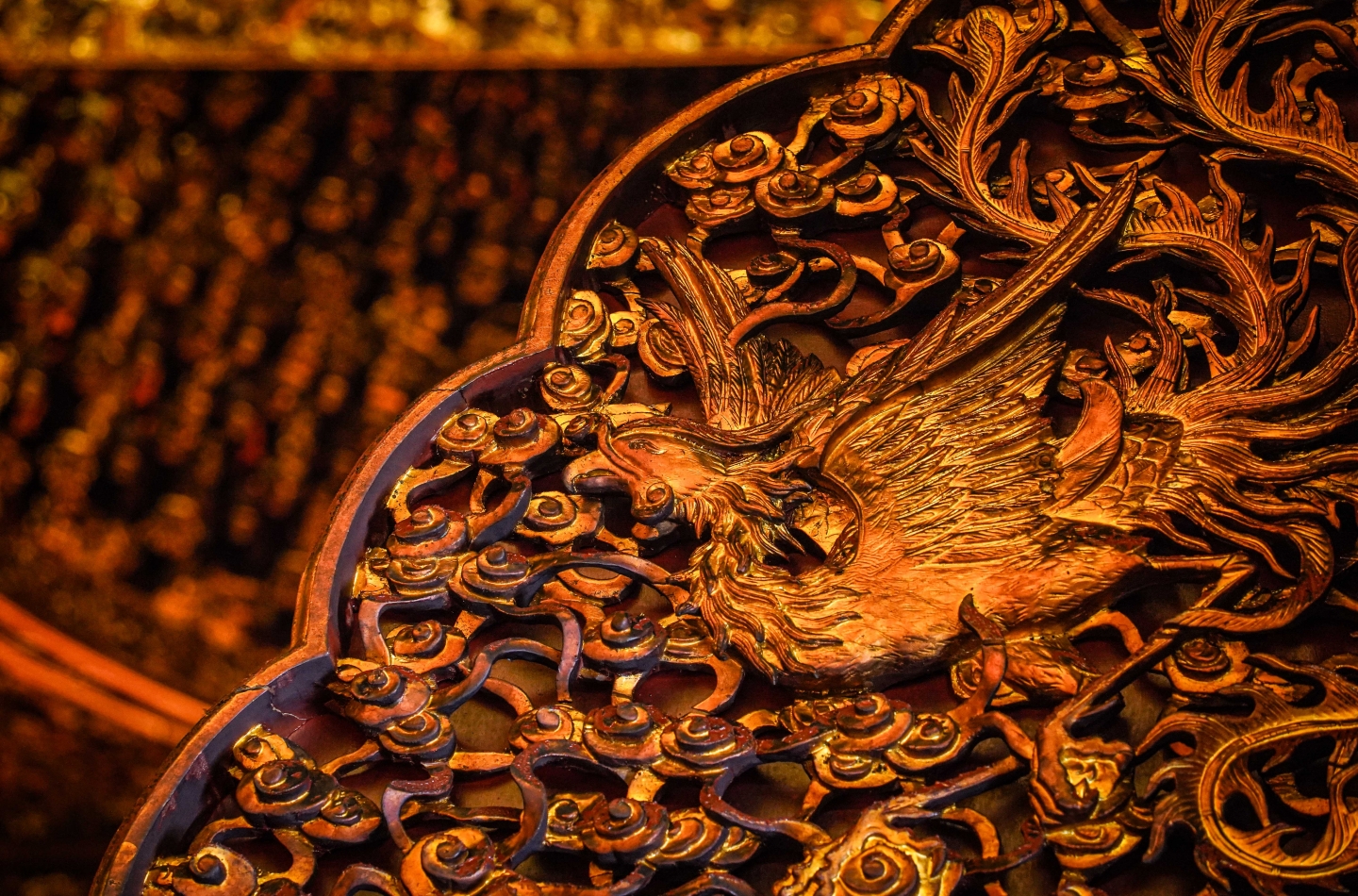
The main hall of Songshan Ciyou Temple enshrines Mazu, the Heavenly Holy Mother.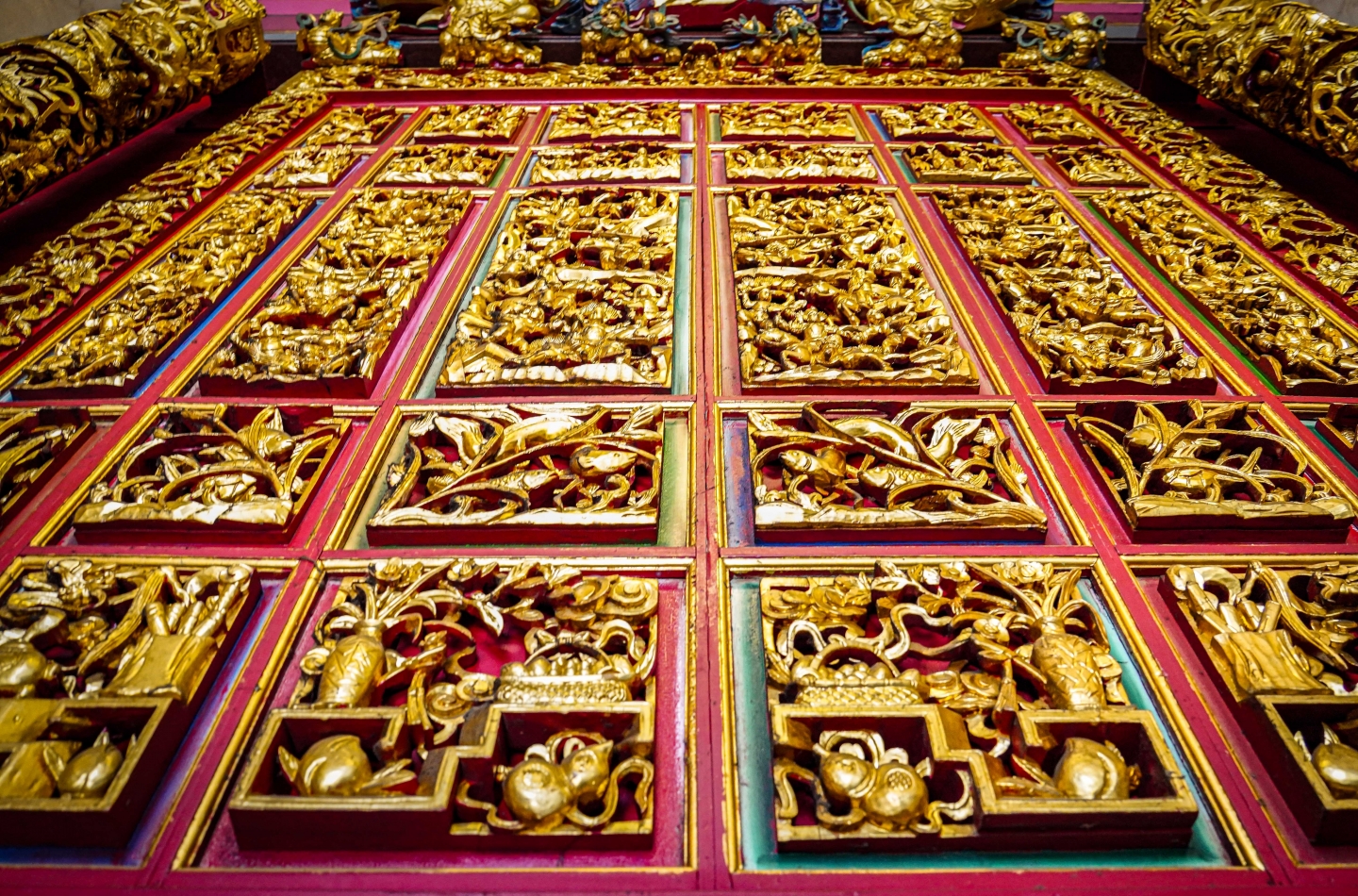 The carved phoenix symbolizes the arrival of good fortune and auspicious blessings.
The carved phoenix symbolizes the arrival of good fortune and auspicious blessings.The carved phoenix symbolizes the arrival of good fortune and auspicious blessings.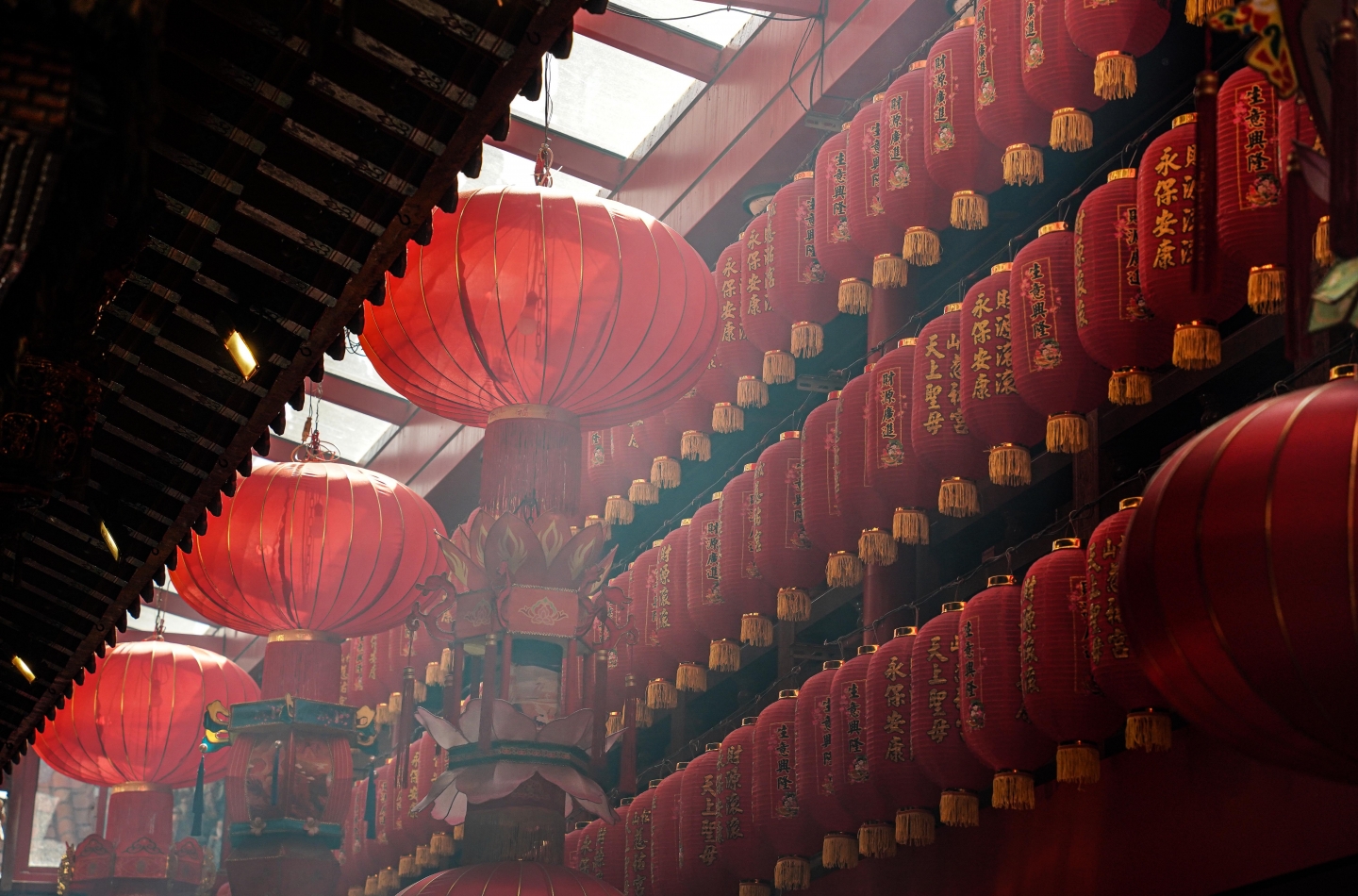 The carved phoenix symbolizes the arrival of good fortune and auspicious blessings.
The carved phoenix symbolizes the arrival of good fortune and auspicious blessings.Songshan Xiahai City God Temple
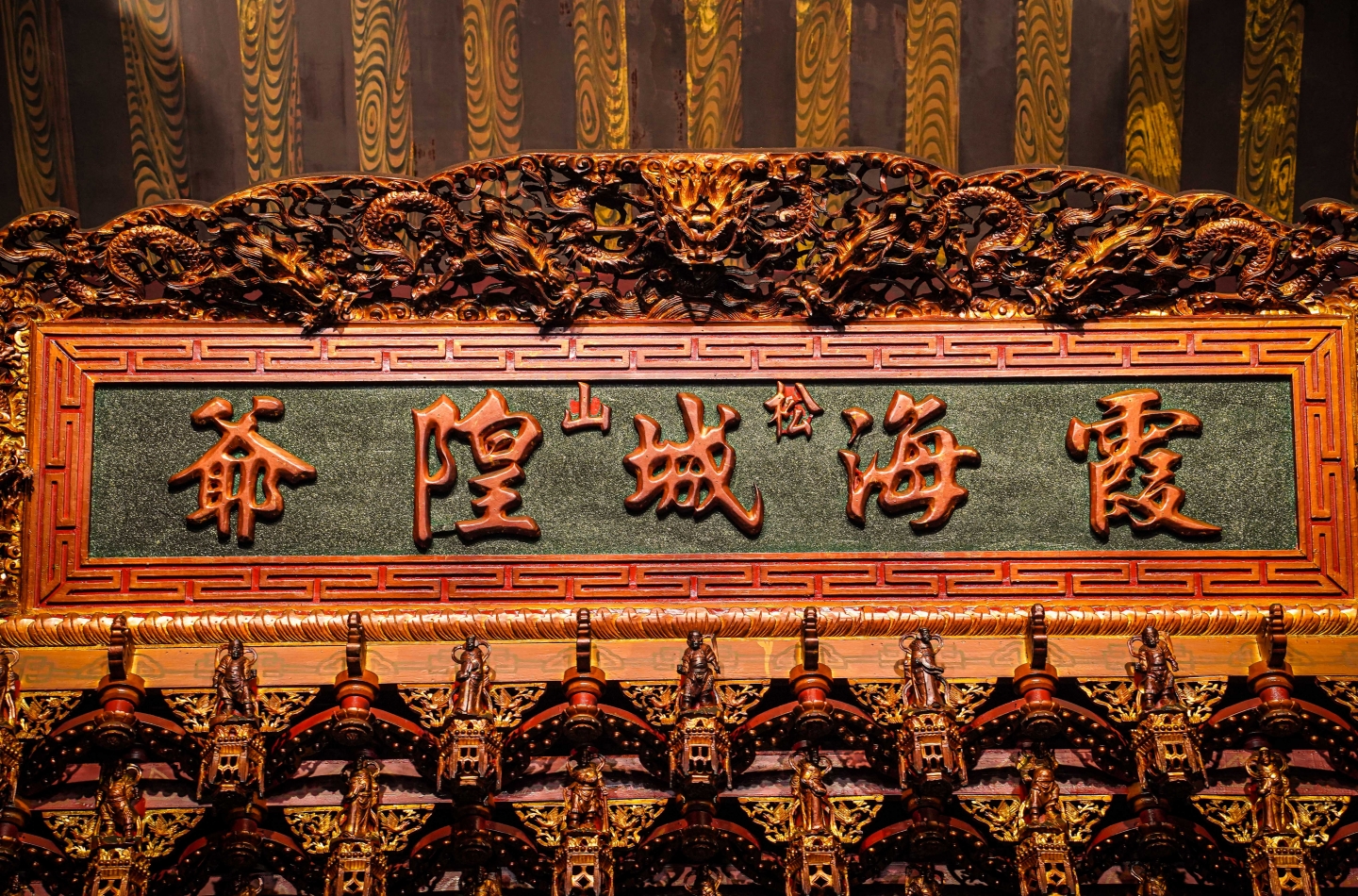 Songshan Xiahai City God Temple
Nestled on a street corner in Songshan District, Songshan Xiahai City God Temple is dedicated to the City God and also enshrines Yue Lao, the deity of love and marriage. On the first floor, the temple houses the Five-Way Gods of Wealth, attracting worshippers seeking blessings in love, business, and general fortune. In earlier days, it was common to see night market vendors stopping by during daytime hours to offer donations, praying for prosperous sales.
Located near Raohe Street Night Market, the temple may lack the grandeur of larger temples, but it exudes a heartfelt, humble charm. It blends faith with the rhythms of local commerce. Sometimes, old neighbors bump into each other here—sharing stories on a bench, celebrating whose child just got into college or whose stall has expanded into a storefront—all under the watchful eye of the City God.
Songshan Xiahai City God Temple reflects the multifaceted spirit of Taipei, offering both residents and visitors a peaceful place for prayer amid the city’s daily bustle.
Located near Raohe Street Night Market, the temple may lack the grandeur of larger temples, but it exudes a heartfelt, humble charm. It blends faith with the rhythms of local commerce. Sometimes, old neighbors bump into each other here—sharing stories on a bench, celebrating whose child just got into college or whose stall has expanded into a storefront—all under the watchful eye of the City God.
Songshan Xiahai City God Temple reflects the multifaceted spirit of Taipei, offering both residents and visitors a peaceful place for prayer amid the city’s daily bustle.
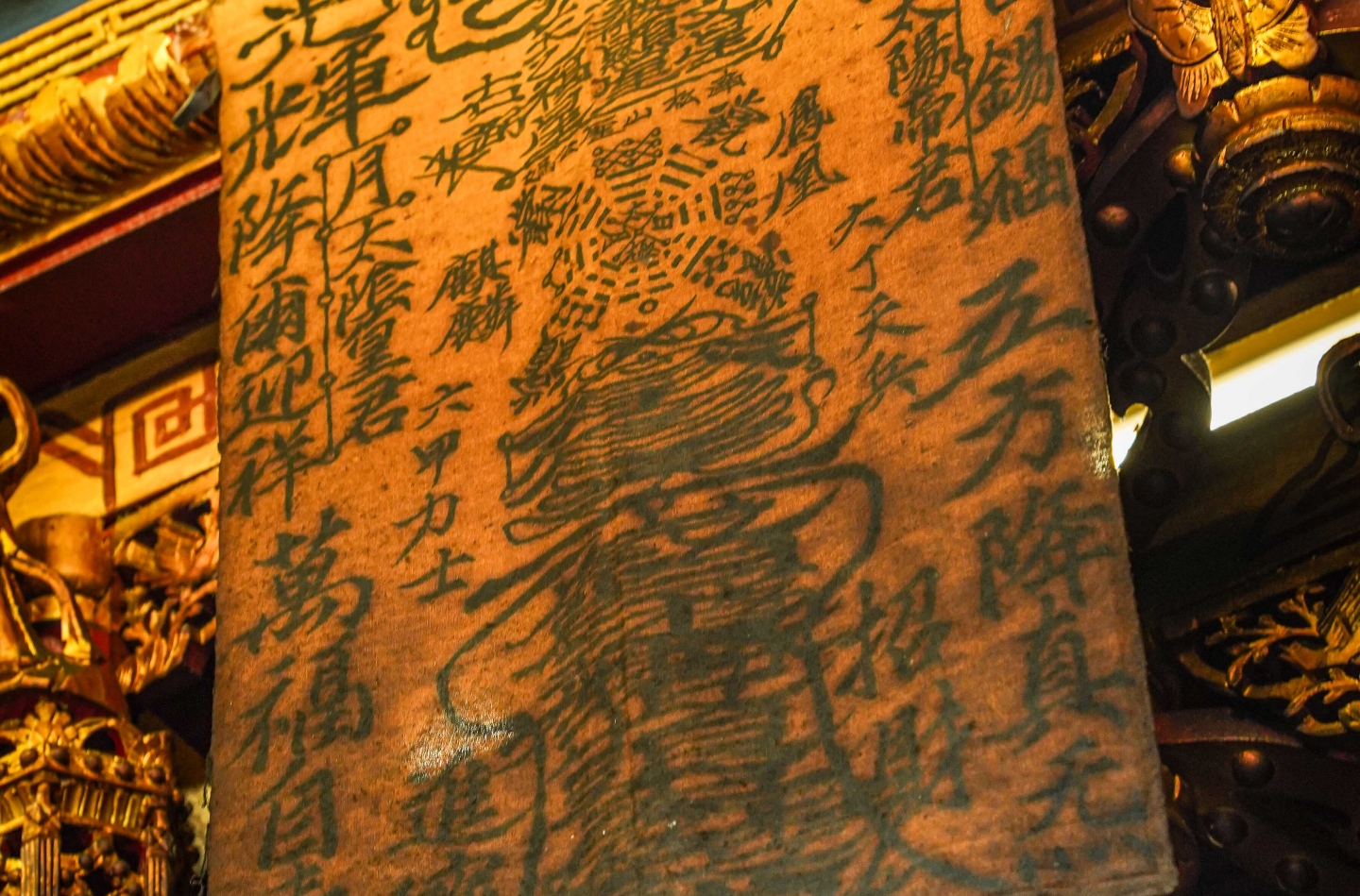
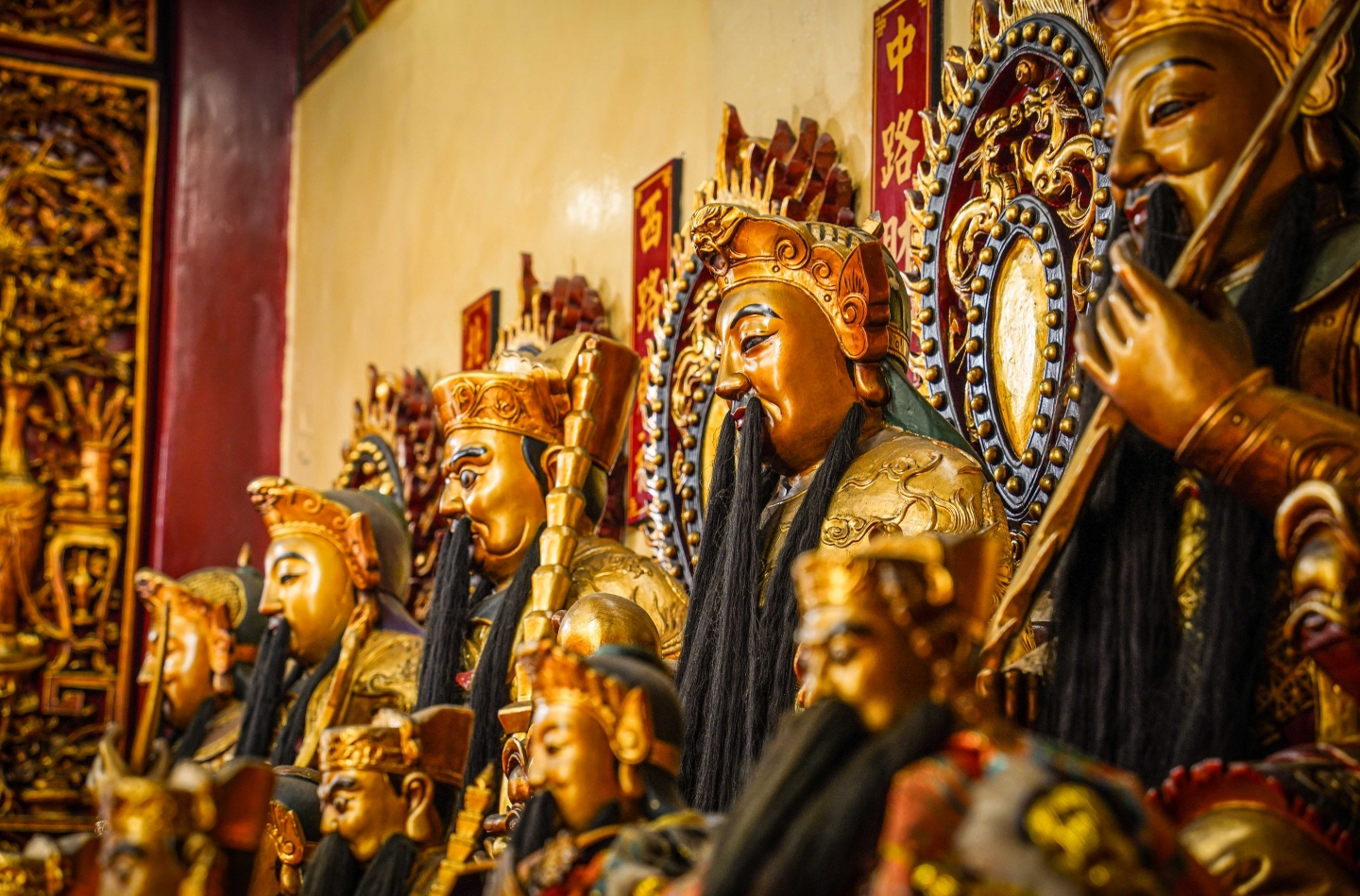
Songshan Xiahai City God Temple
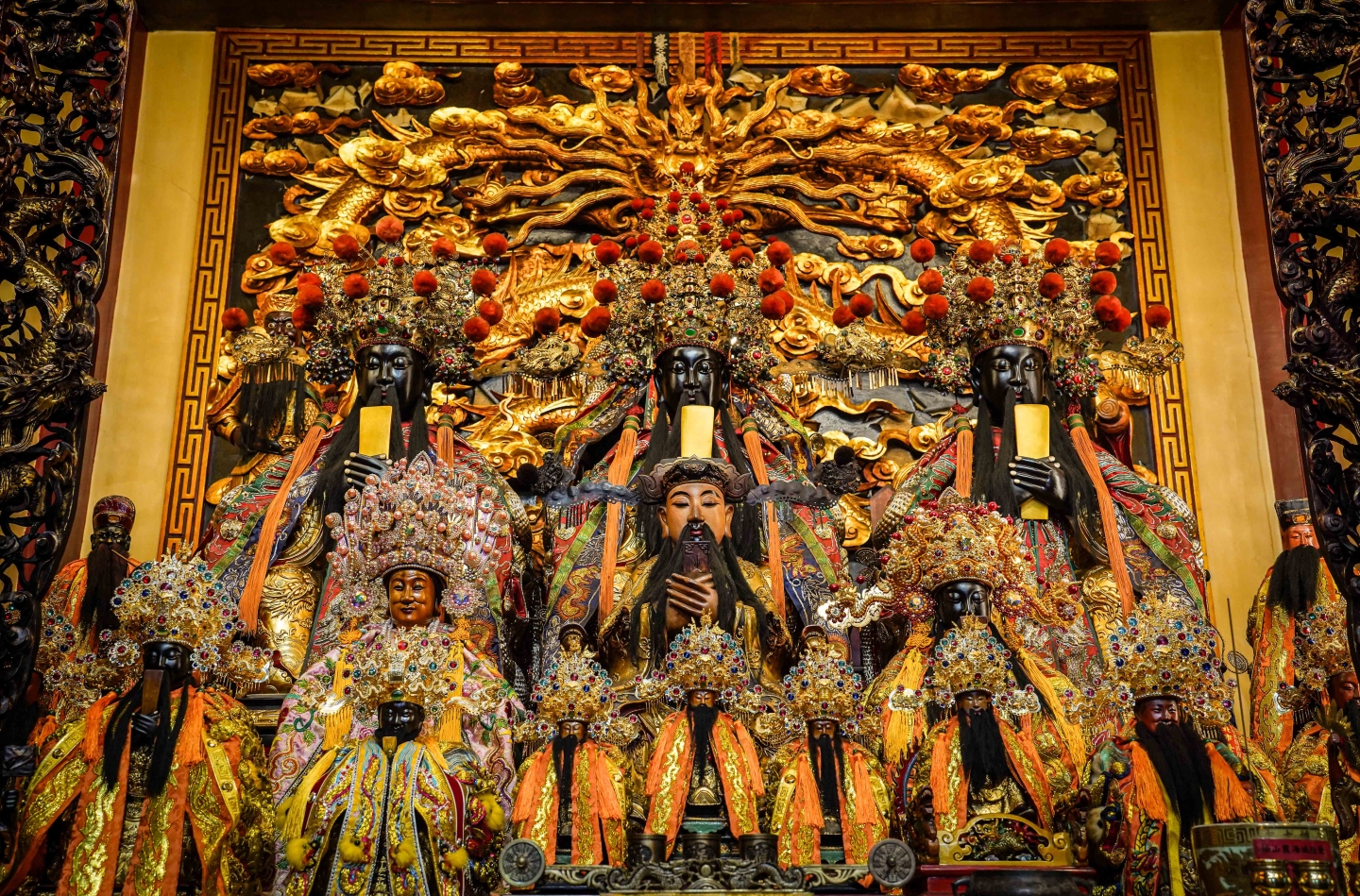 The main hall on the second floor enshrines the Xia-Hai City God.
The main hall on the second floor enshrines the Xia-Hai City God.The first floor enshrines the Five-Way Gods of Wealth, where worshippers pray for prosperity and career success.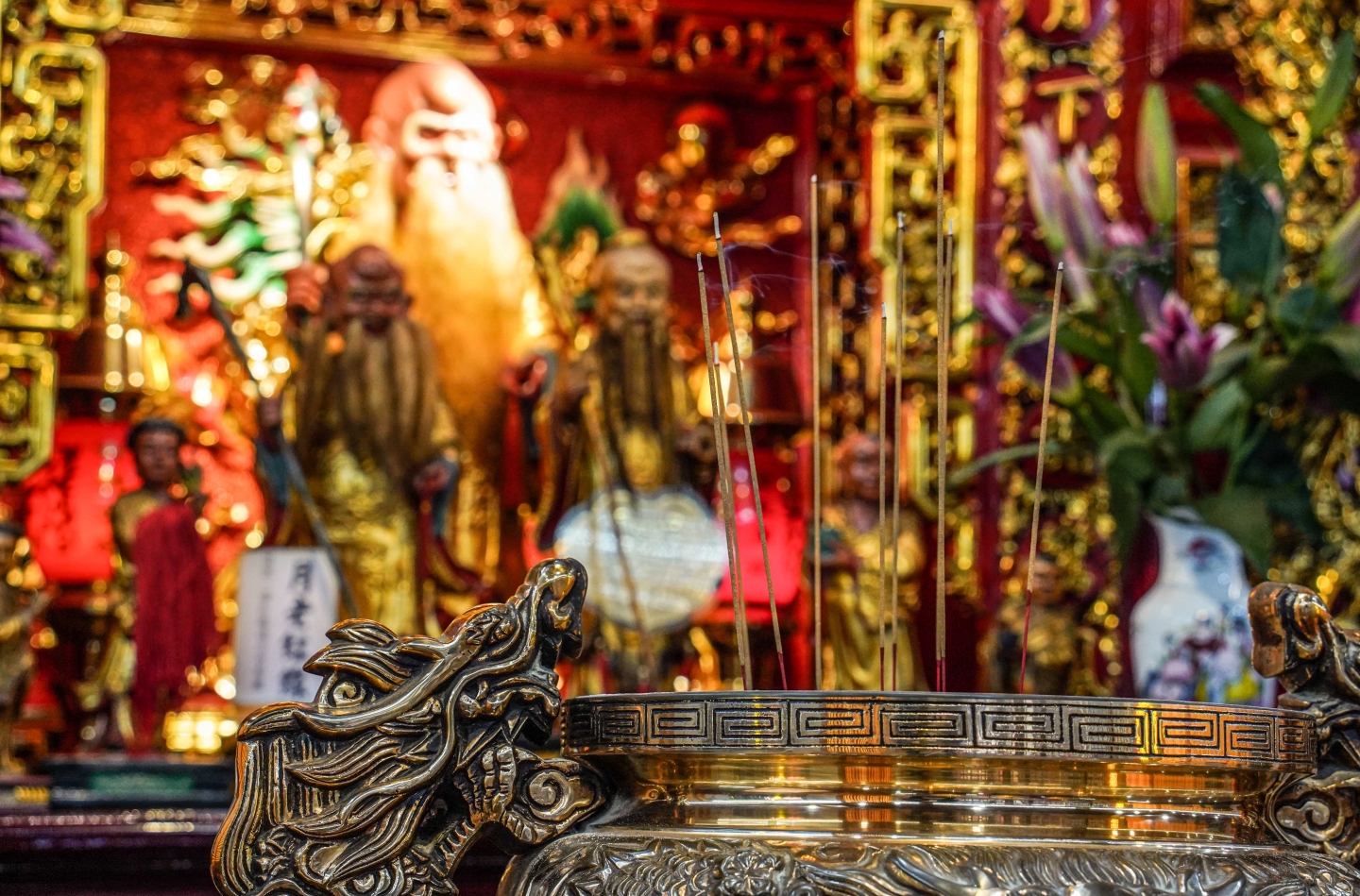 The side hall on the second floor also enshrines Yue Lao, bringing good matches to devoted visitors.
The side hall on the second floor also enshrines Yue Lao, bringing good matches to devoted visitors.Songshan Fengtian Temple
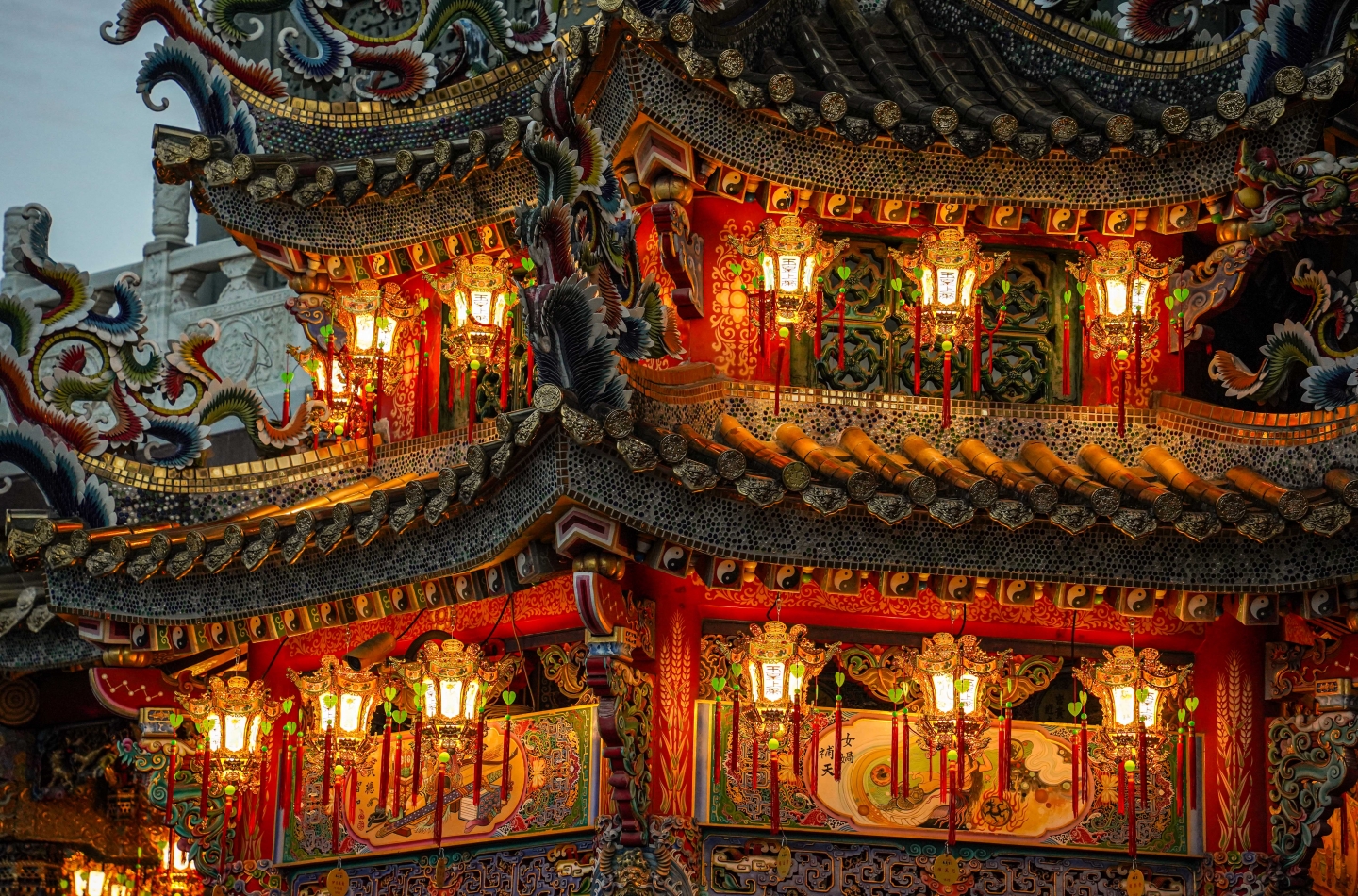
Built along a hillside, Songshan Fengtian Temple stands grand and imposing. It’s hard to imagine that this majestic structure began as a small cave shrine dedicated to the Jade Emperor. Today, its intricate beams, sweeping eaves, detailed cut-and-paste art, and fine wood carvings showcase the beauty of traditional craftsmanship. Surrounded by greenery, the temple offers a quiet retreat with glimpses of the city’s vibrant skyline—an oasis of serenity amid urban hustle.
The temple primarily worships the Jade Emperor and also honors deities connected to the Wunian Qiansui (Five-Year Lords) lineage from Maming Mountain, reflecting the diversity of Taiwanese folk beliefs. As the city has modernized and life has grown more fast-paced, Fengtian Temple has remained a spiritual anchor for the local community. It actively promotes Taoist culture and supports social welfare programs for the disadvantaged.
No matter how the landscape changes, Fengtian Temple continues to uphold kindness and inclusiveness, bearing witness to Songshan’s transformation from an agricultural village to a modern metropolis.
The temple primarily worships the Jade Emperor and also honors deities connected to the Wunian Qiansui (Five-Year Lords) lineage from Maming Mountain, reflecting the diversity of Taiwanese folk beliefs. As the city has modernized and life has grown more fast-paced, Fengtian Temple has remained a spiritual anchor for the local community. It actively promotes Taoist culture and supports social welfare programs for the disadvantaged.
No matter how the landscape changes, Fengtian Temple continues to uphold kindness and inclusiveness, bearing witness to Songshan’s transformation from an agricultural village to a modern metropolis.
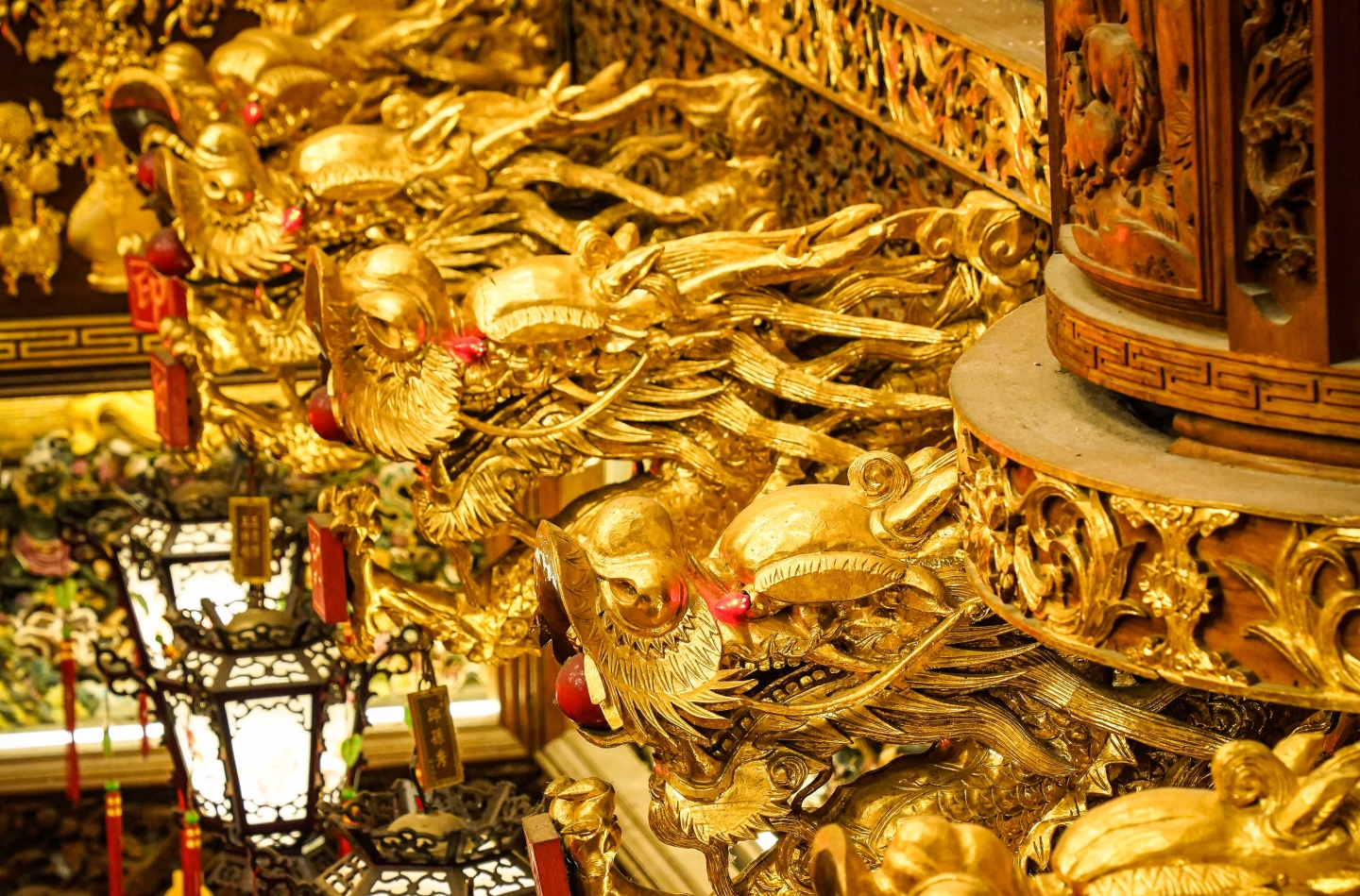
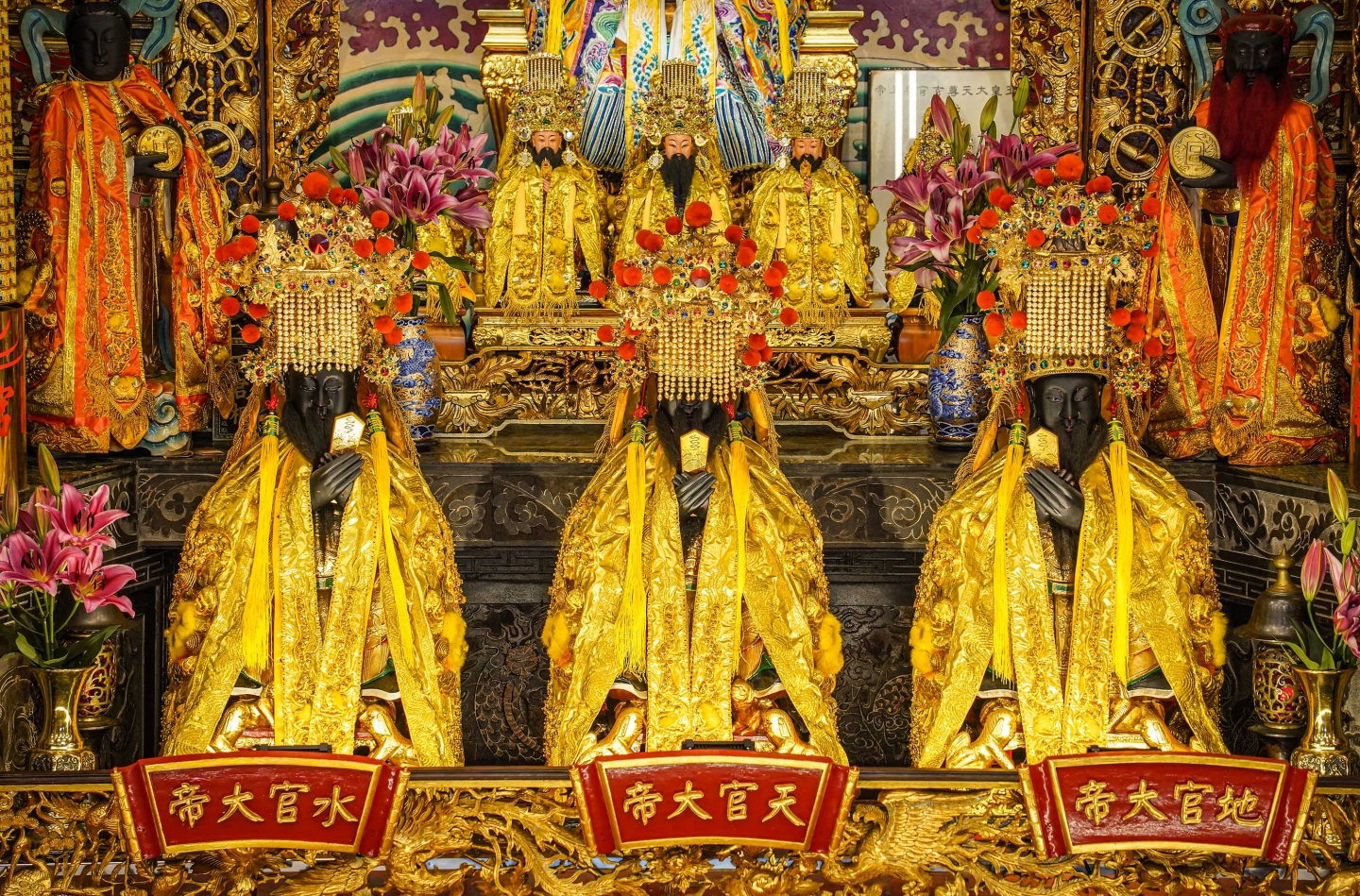
Songshan Fengtian Temple is richly adorned, with exquisite carvings found throughout its interior.
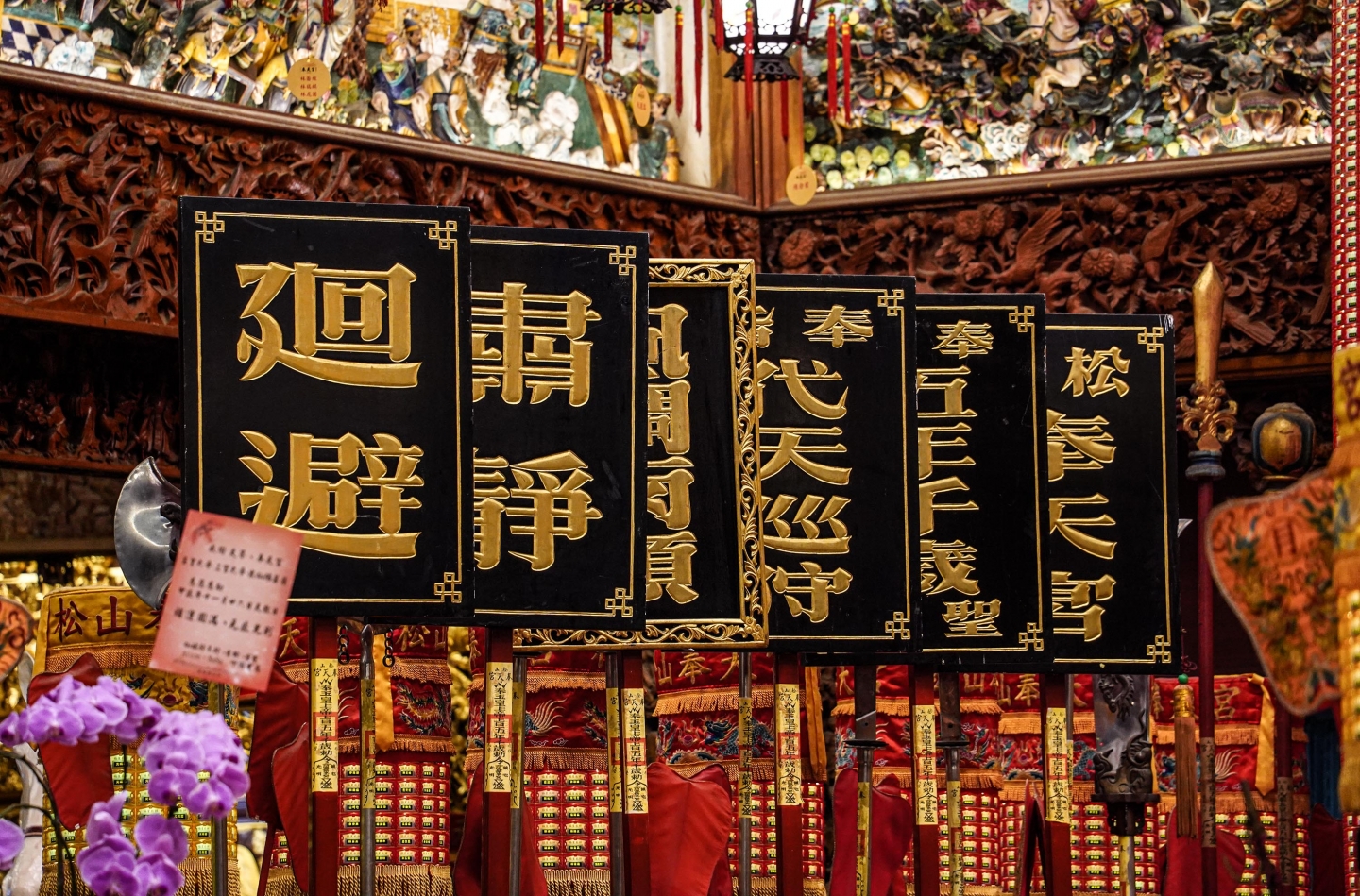 Delicate deity tablets honor the spirit lineages from Maming Mountain’s Wunian Qiansui, forming a solemn procession during temple tours.
Delicate deity tablets honor the spirit lineages from Maming Mountain’s Wunian Qiansui, forming a solemn procession during temple tours.The second floor of Songshan Fengtian Temple enshrines the Jade Emperor and the Three Officials, earning it the name “Tiangong Temple” (Temple of Heaven).
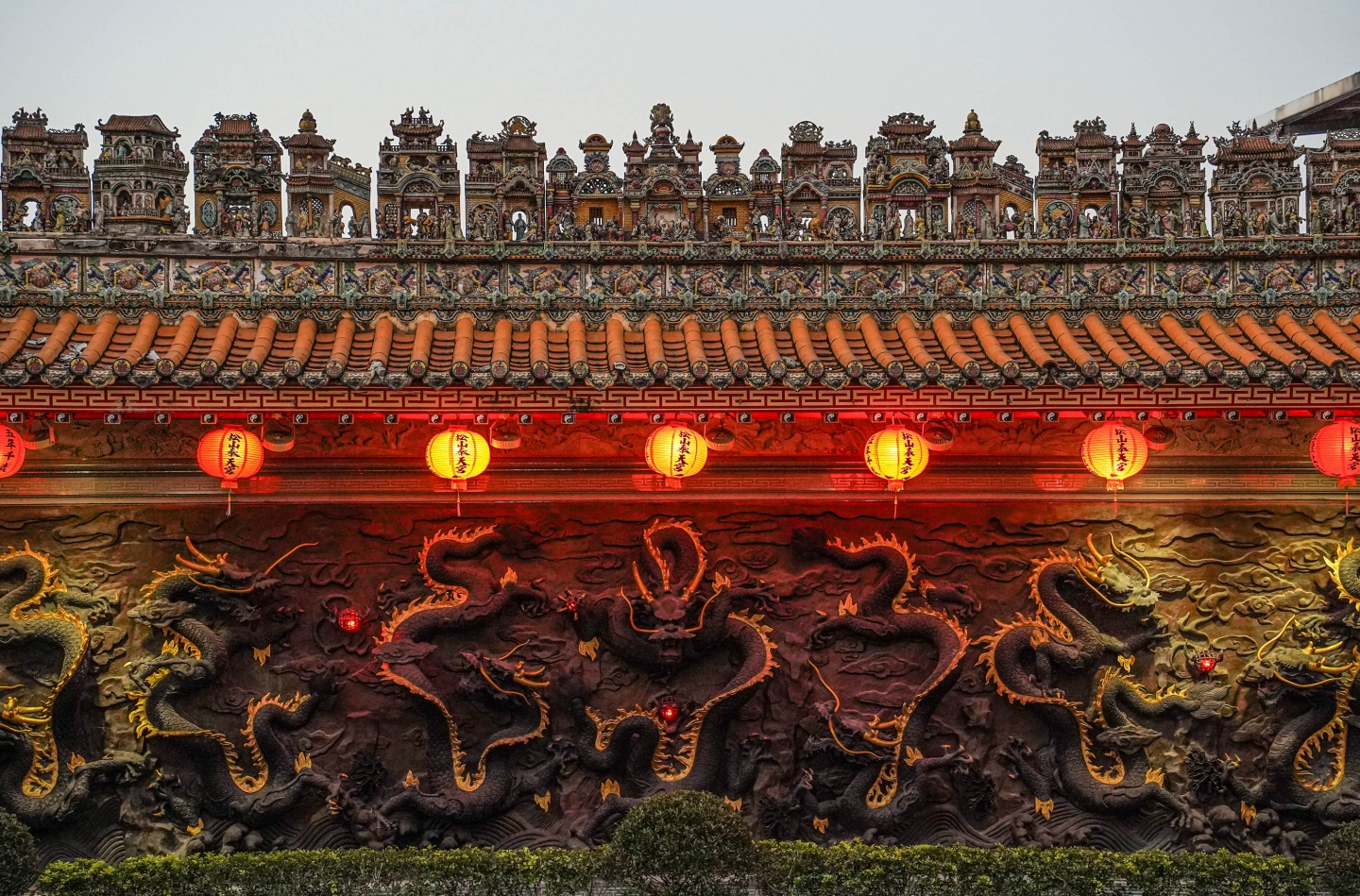 The stone carving of two dragons chasing a pearl on the temple courtyard wall exudes elegance and dignity.
The stone carving of two dragons chasing a pearl on the temple courtyard wall exudes elegance and dignity.Songshan Cihui Temple
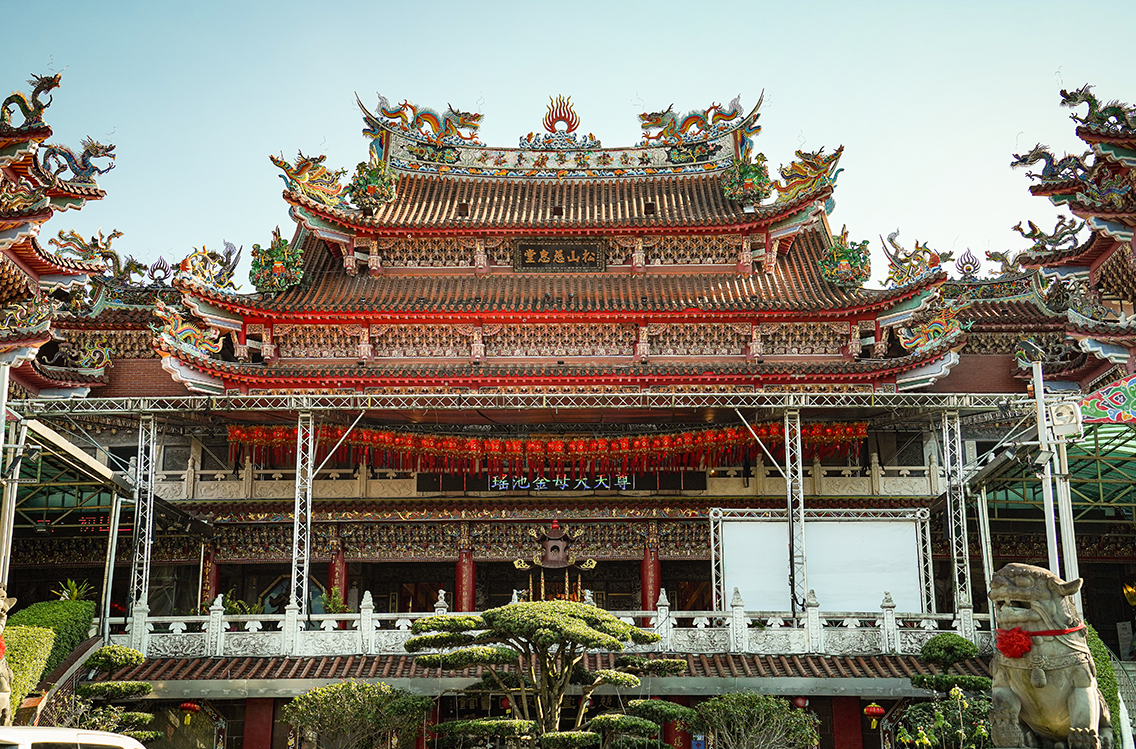
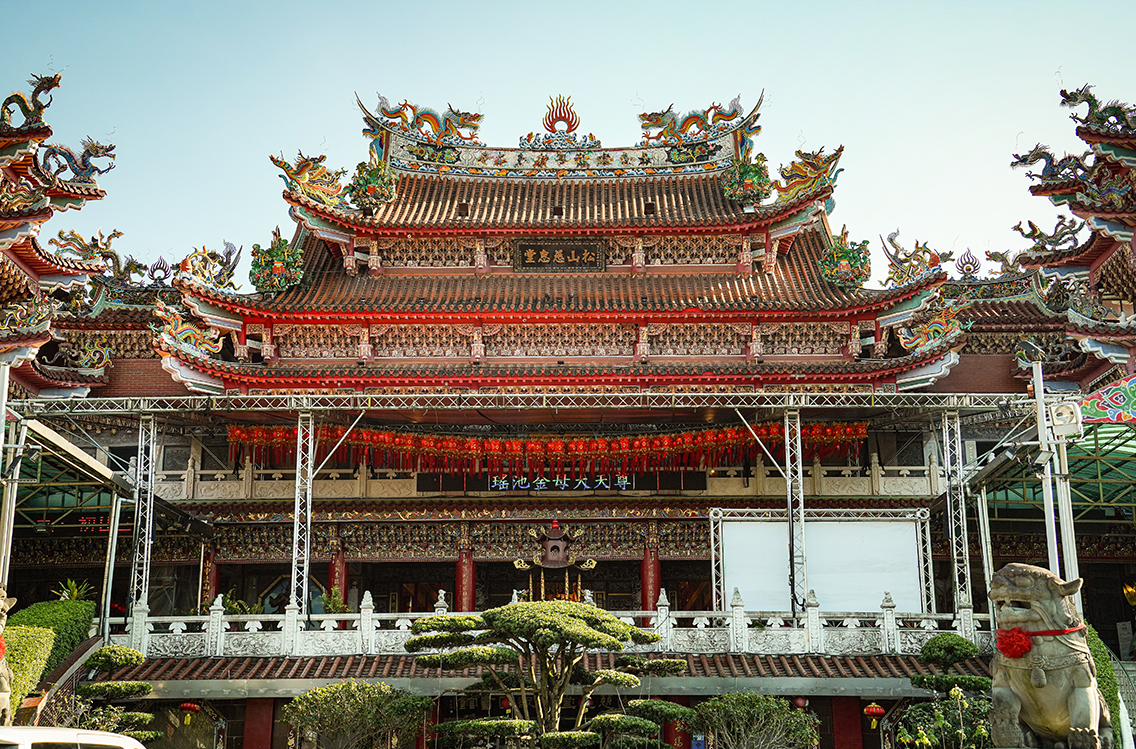 The main hall of Songshan Cihui Temple stands tall and majestic.
Situated at the foot of Tiger Mountain in Taipei’s Xinyi District, Songshan Cihui Temple overlooks the city in quiet contrast to its bustling surroundings. Though located in a lively urban area, the temple’s interior offers a haven of peace, allowing busy citizens and worshippers to pause and find rest. More than just a place of worship, it has become a spiritual home—where people connect, care for one another, and feel emotionally supported, as if the temple gently protects the hearts of Taipei’s residents.
Over fifty years ago, temple leader Guo Ye-zih began worshipping the Mother of the Jade Pond (Yaochi Jinmu) at an altar in her home. That act of devotion eventually grew into today’s temple and its enduring mission of compassion and blessing.
Every year, crowds gather for the Taipei Mother’s Culture Festival in May, featuring a grand pilgrimage procession, and again in the seventh lunar month for Yaochi Jinmu’s birthday celebration. The temple forecourt comes alive as neighbors and worshippers unite in reverent celebration.
Over fifty years ago, temple leader Guo Ye-zih began worshipping the Mother of the Jade Pond (Yaochi Jinmu) at an altar in her home. That act of devotion eventually grew into today’s temple and its enduring mission of compassion and blessing.
Every year, crowds gather for the Taipei Mother’s Culture Festival in May, featuring a grand pilgrimage procession, and again in the seventh lunar month for Yaochi Jinmu’s birthday celebration. The temple forecourt comes alive as neighbors and worshippers unite in reverent celebration.
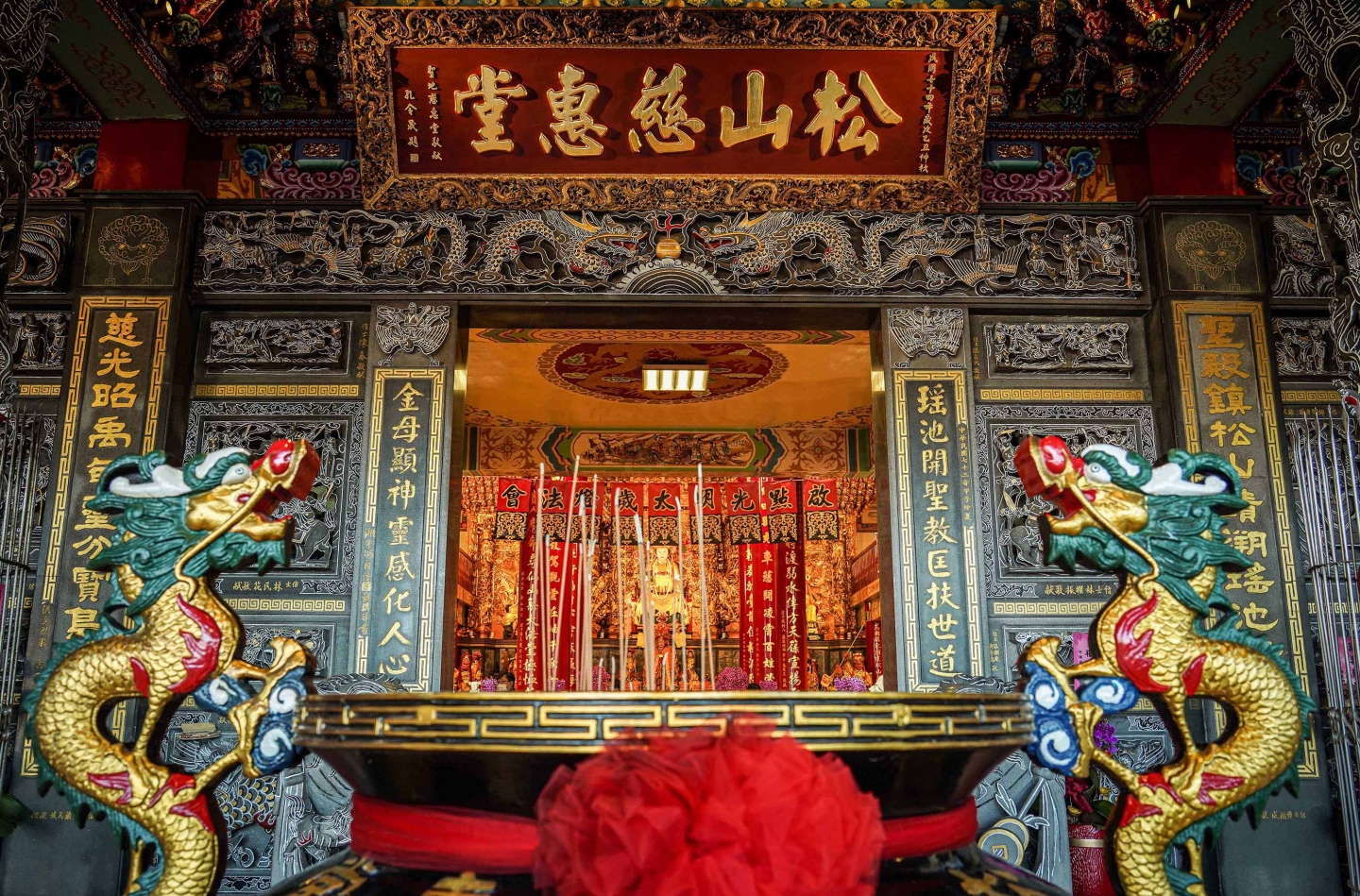 The main hall of Songshan Cihui Temple stands tall and majestic.
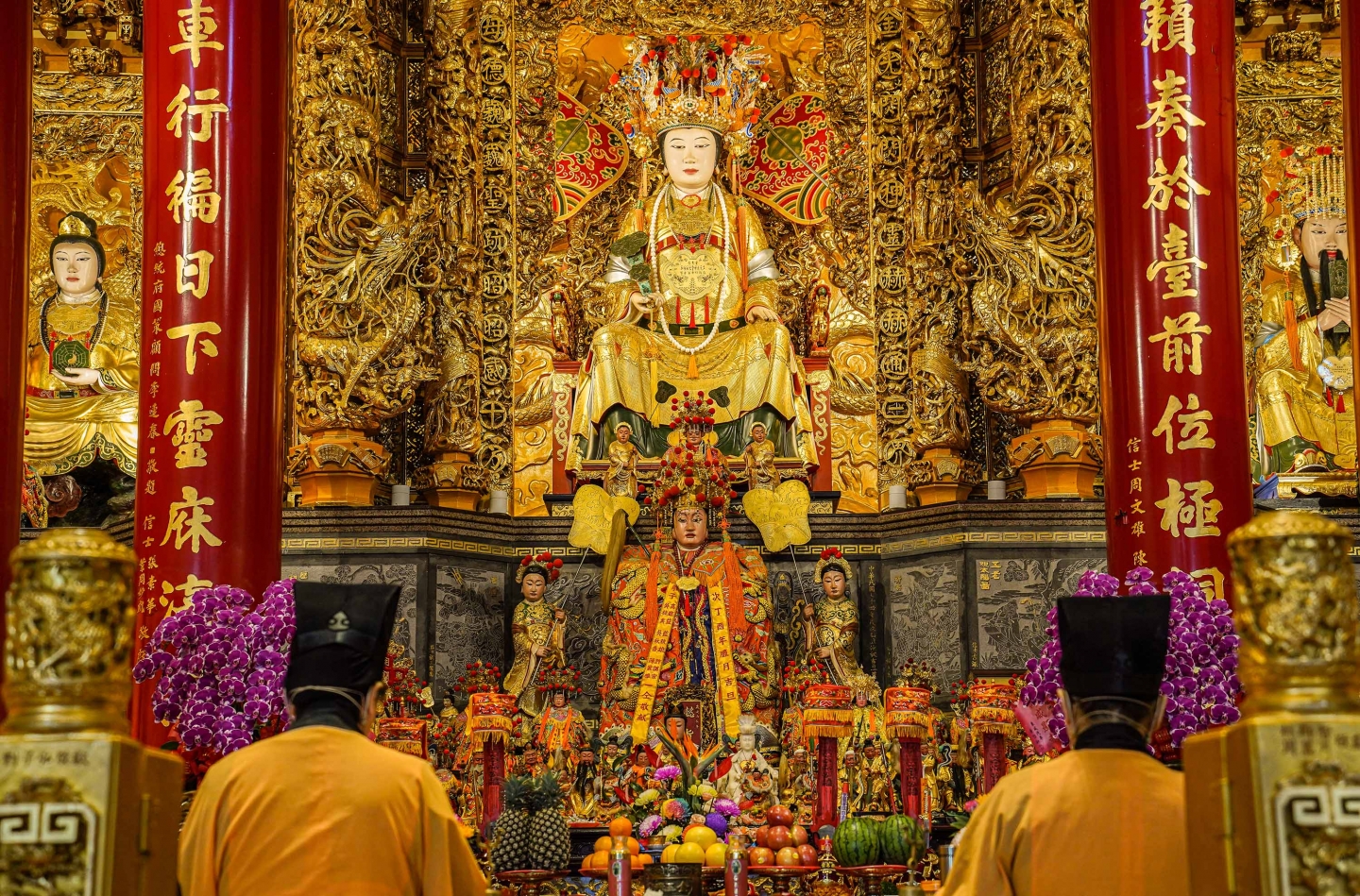 The main hall enshrines the Mother of the Jade Pond, drawing many devoted worshippers.
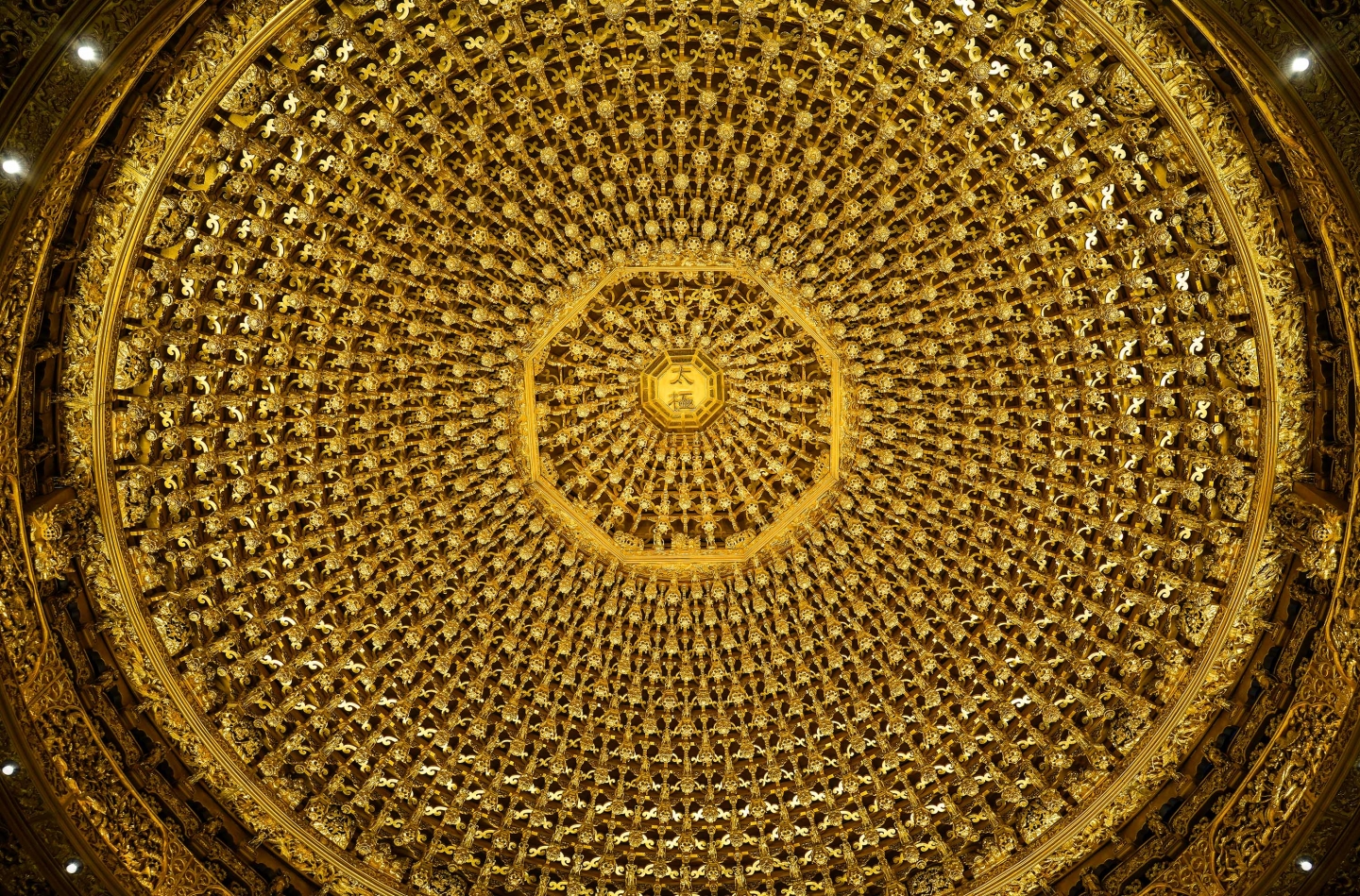 The ornate coffered ceiling of the main hall highlights the revered status of Mother of the Jade Pond.
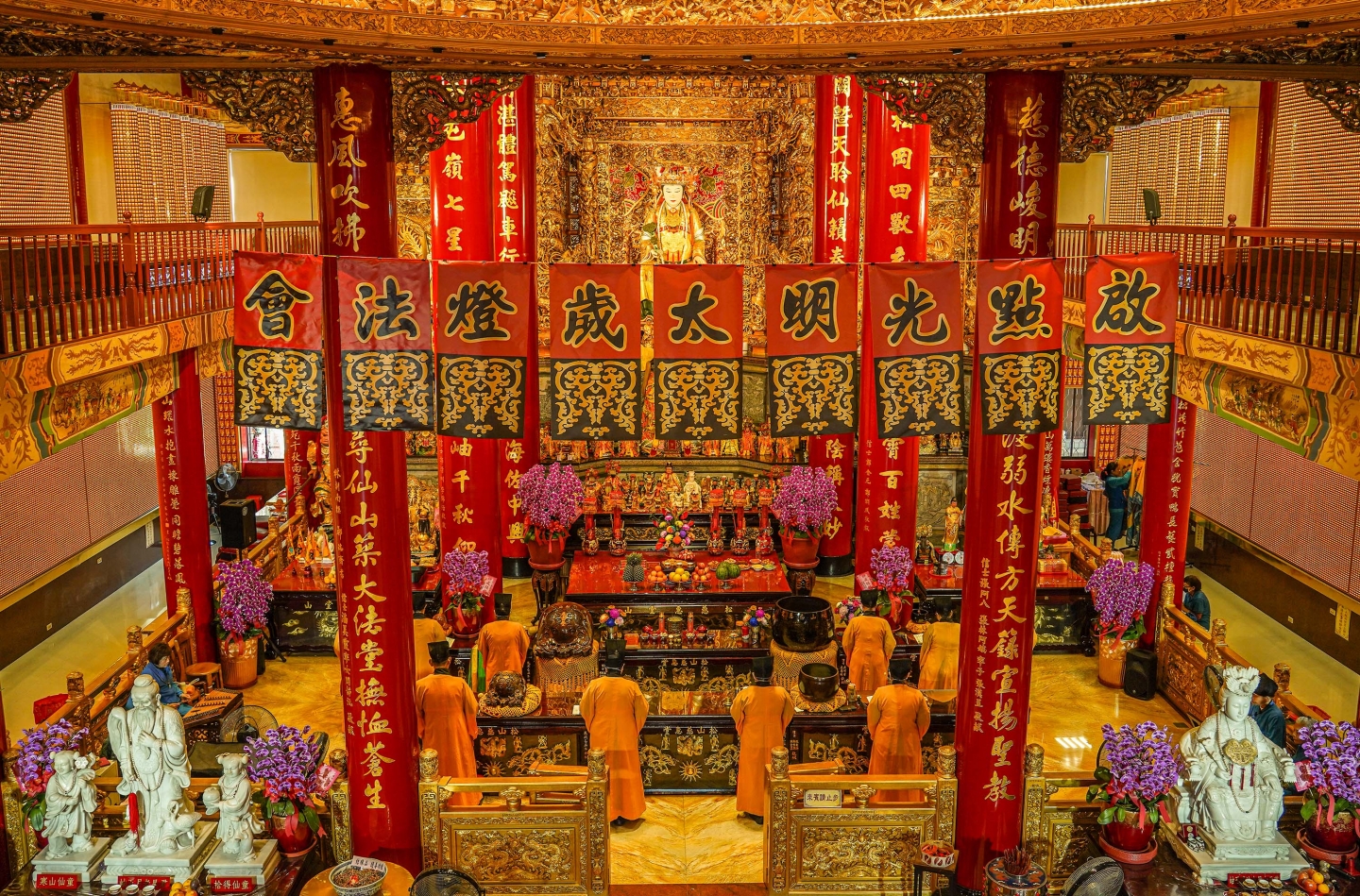 Regular ceremonies offer prayers for the nation and people.
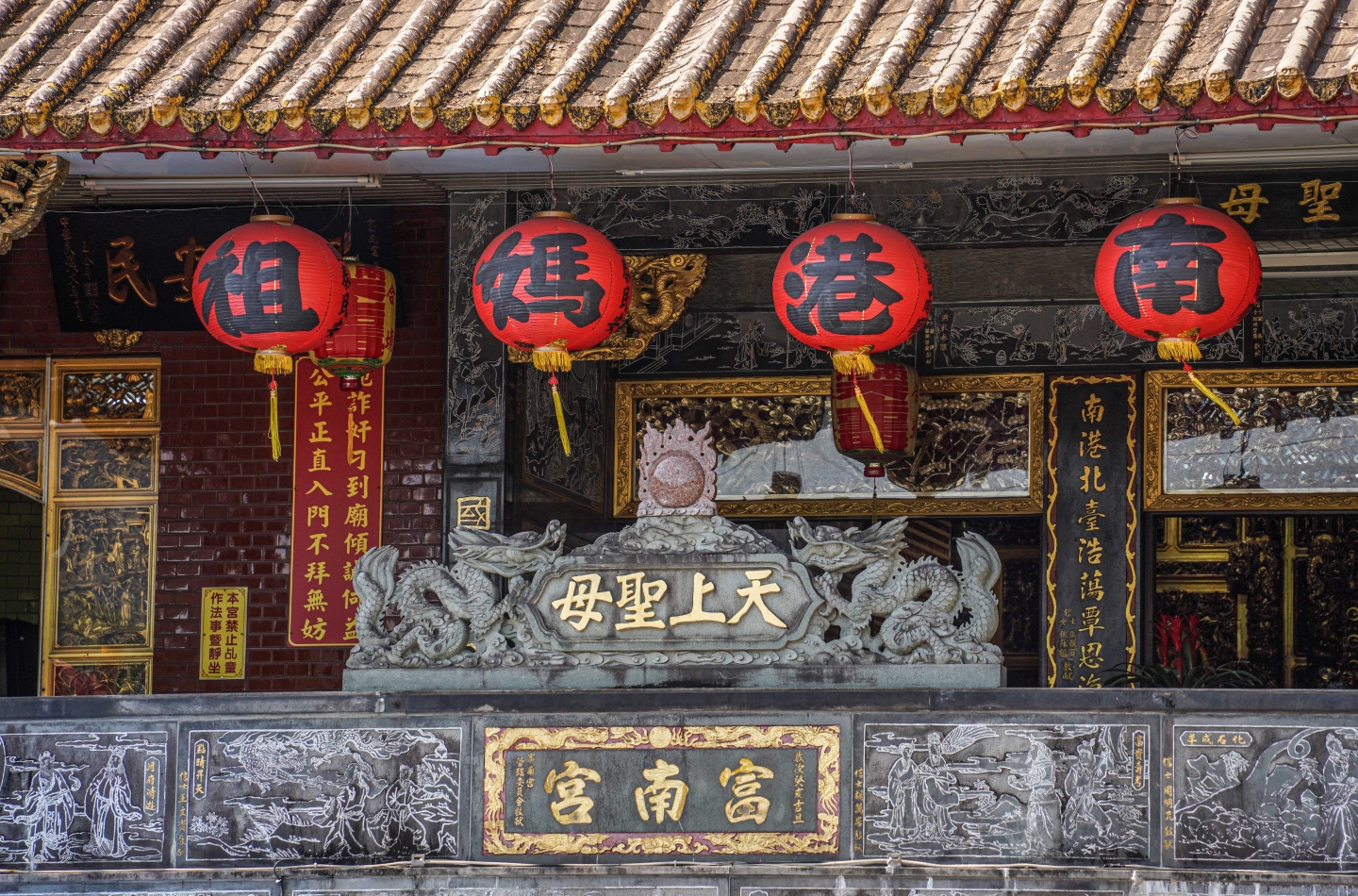
Funnan Temple
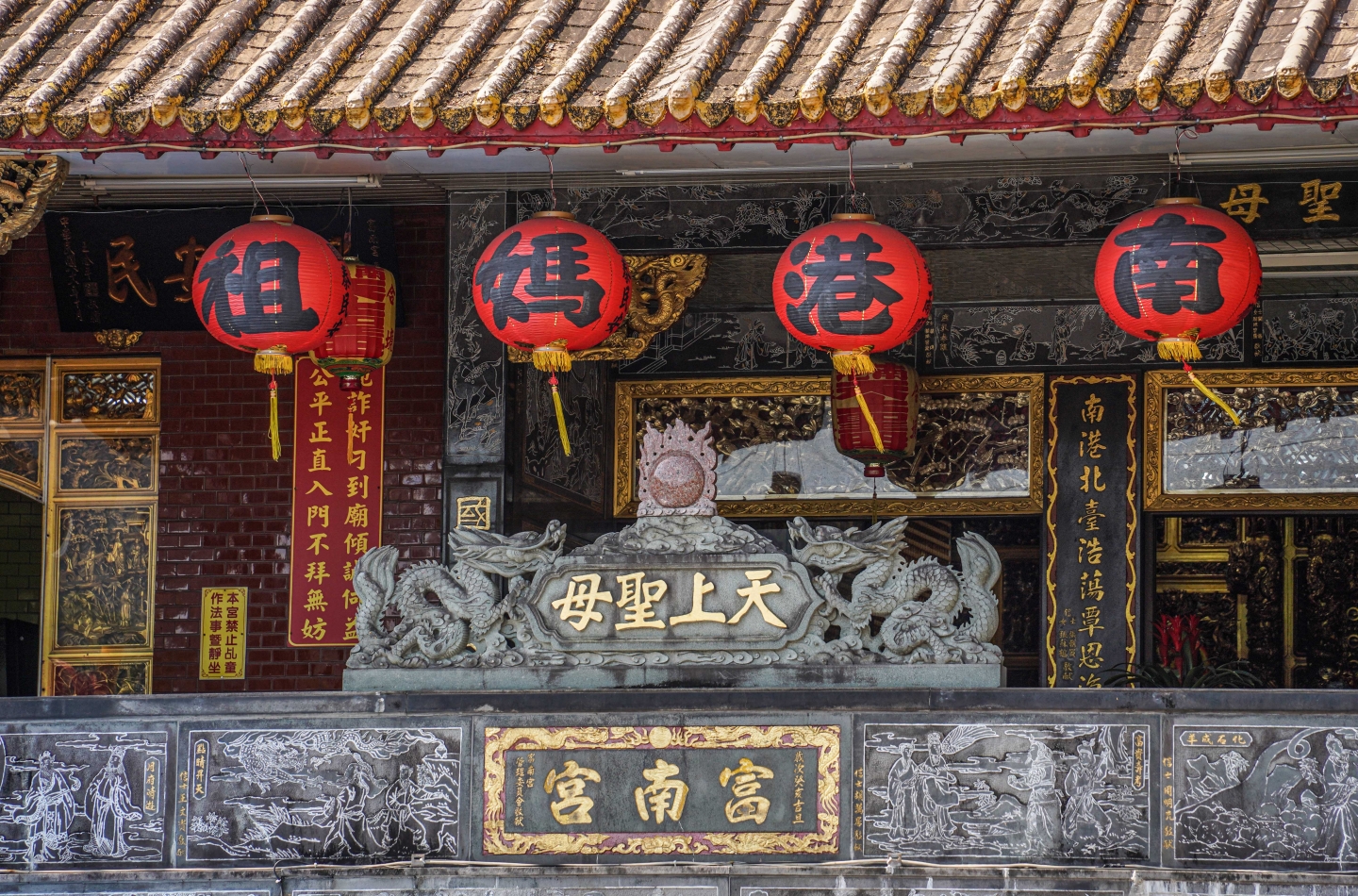
Located on Yanjiuyuan Road in Taipei’s Nangang District, Funnan Temple is dedicated to two principal deities: Fude Zhengshen (the Earth God) on the first floor, and Mazu—revered here as Nangang Mazu—on the second. This dual dedication is rare among Taiwanese temples. Its incense-burning tradition has carried on from rural village roots to today's bustling commercial district, reflecting the story of immigration, land development, economic growth, and local life. Over time, the temple has become a spiritual center for the Nangang community.
Despite the busy traffic in front of the temple, the devotion of its visitors remains unchanged. Office workers passing by in the crowd may pause briefly, hands clasped in prayer. These moments of reverence—quiet yet profound—reflect Funnan Temple’s importance to local residents and enrich Taipei’s diverse religious landscape and cultural heritage.
Despite the busy traffic in front of the temple, the devotion of its visitors remains unchanged. Office workers passing by in the crowd may pause briefly, hands clasped in prayer. These moments of reverence—quiet yet profound—reflect Funnan Temple’s importance to local residents and enrich Taipei’s diverse religious landscape and cultural heritage.
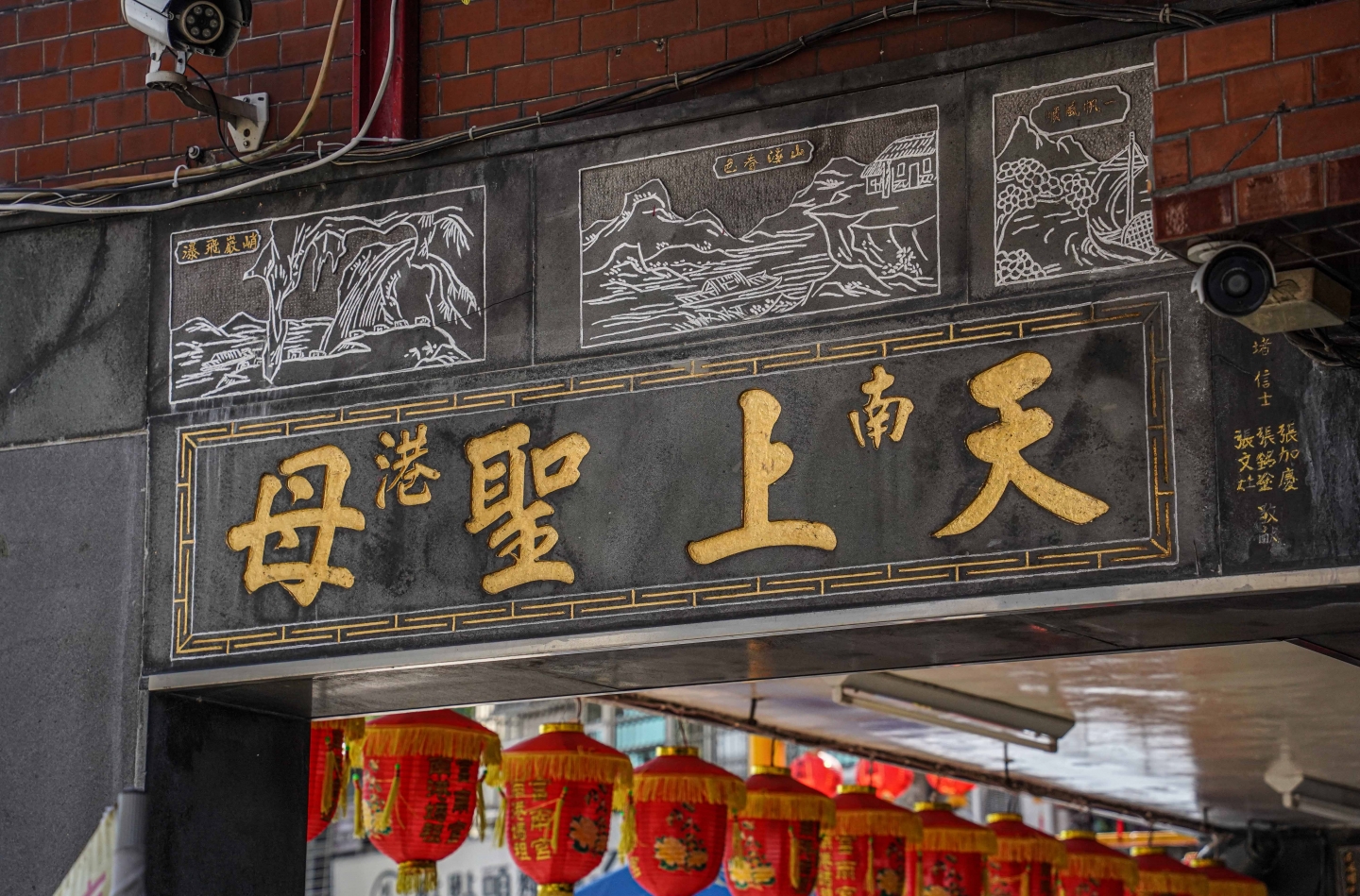
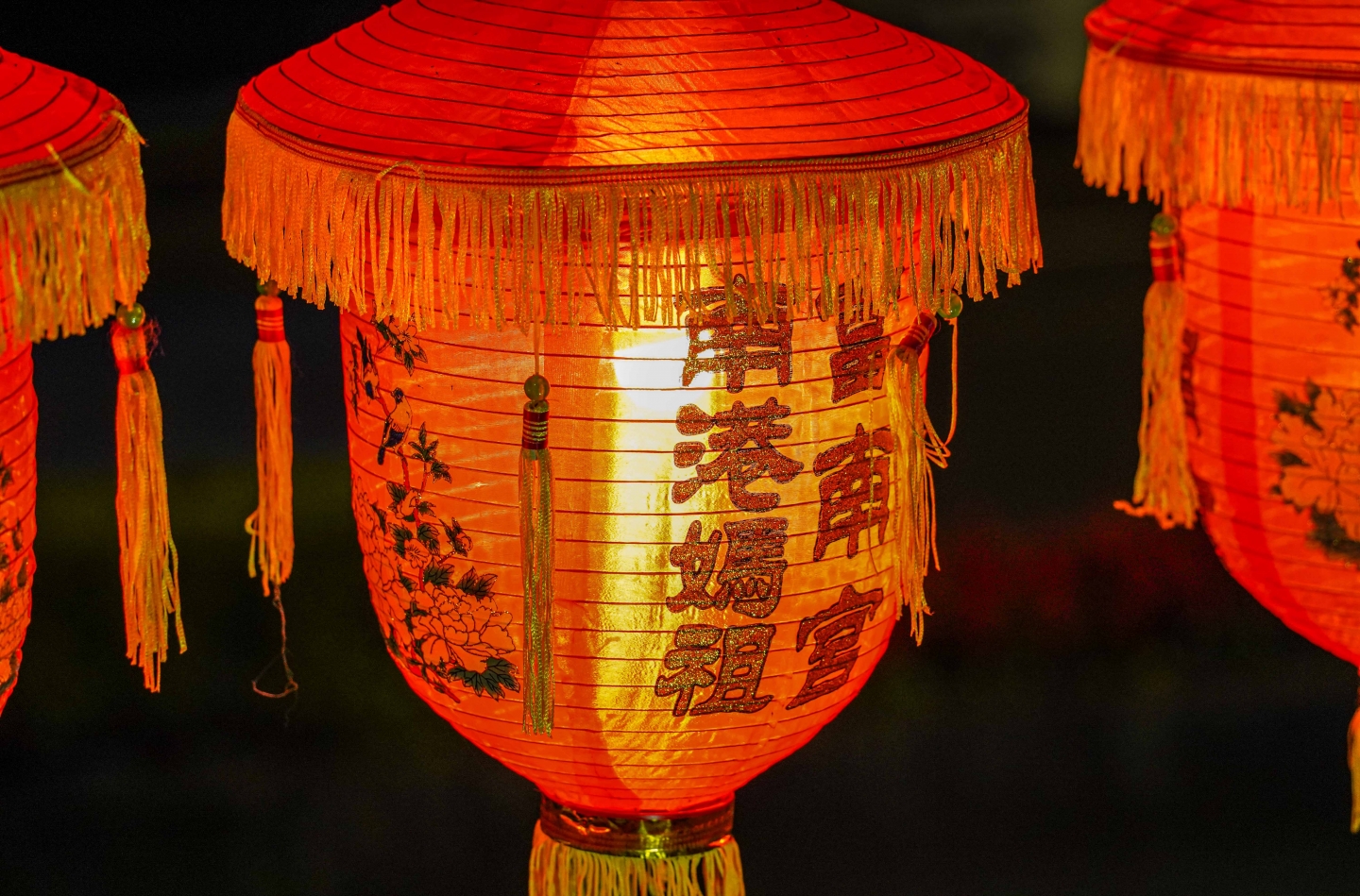
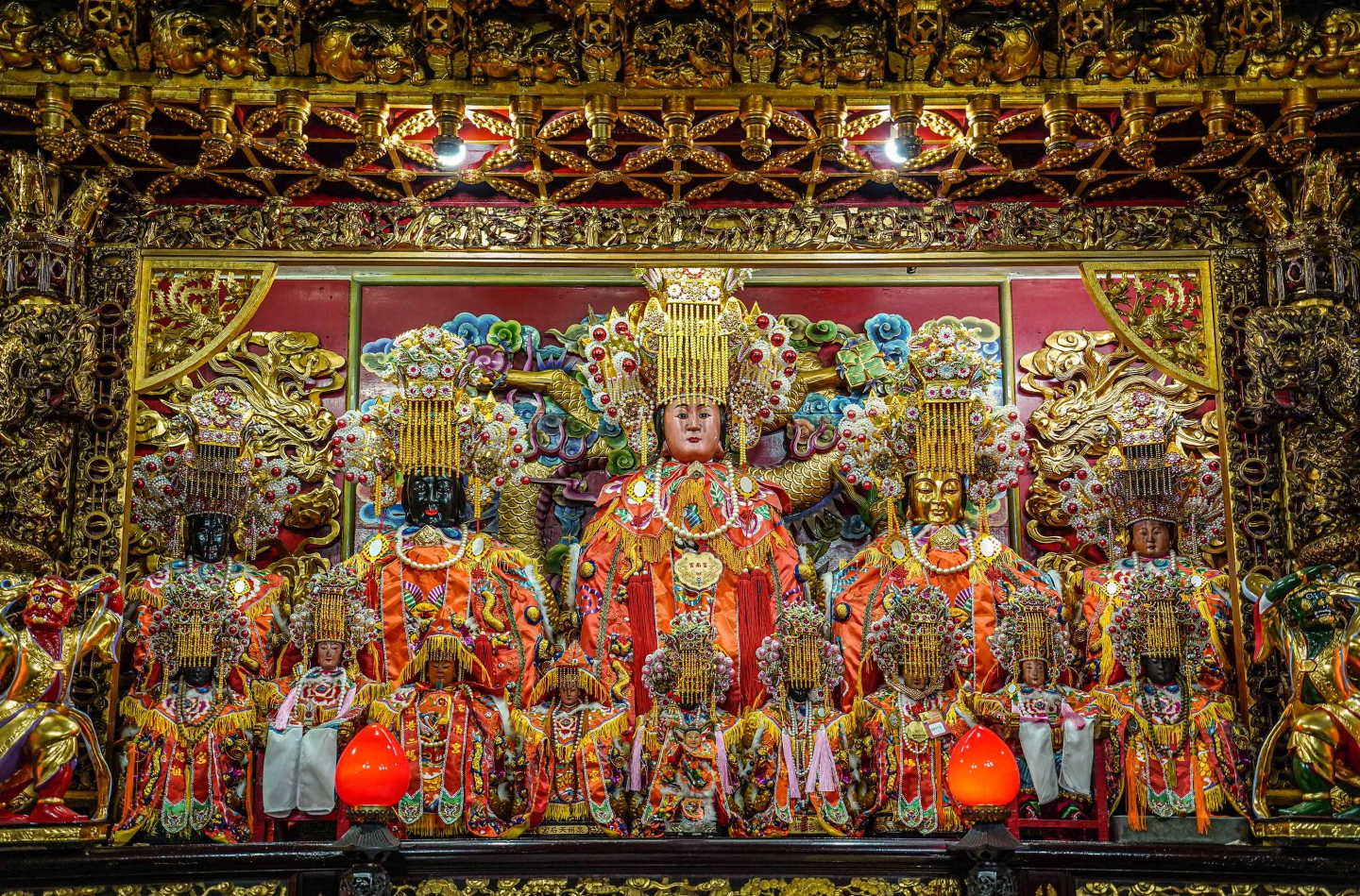 The second floor enshrines Nangang Mazu.
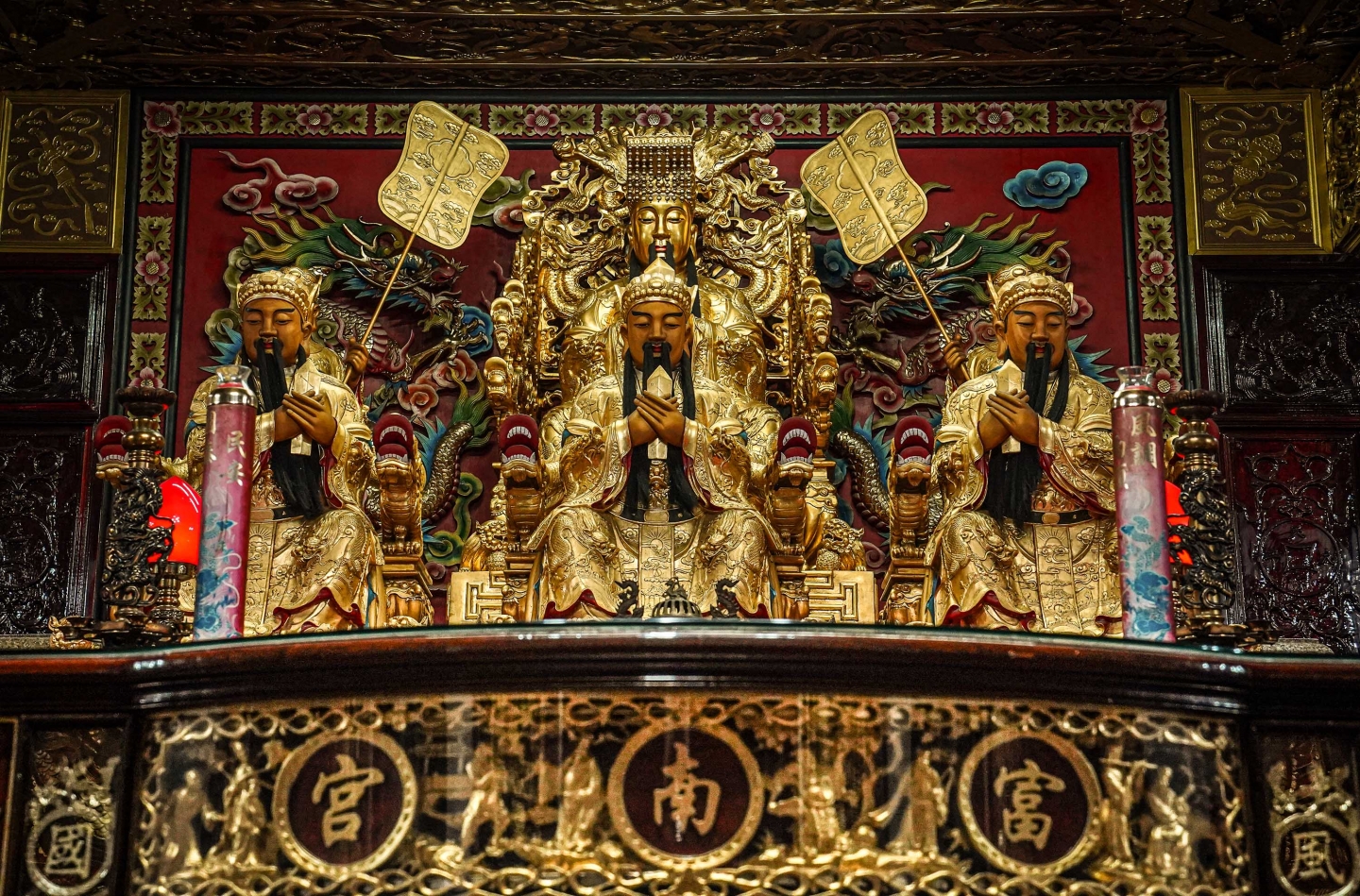 The third floor enshrines the majestic golden statue of the Jade Emperor.